2026-05-29
Upper Blepharoplasty: Is It Really a Surgery You Shouldn't Get?
#LowerBlepharoplasty #UnderEyeFatRepositioning #MiddleAgedEyeSurgery #GangnamLowerBlepharoplasty #GangnamUnderEyeFatRepositioning #GangnamAntiAgingSurgery #GangnamStationUnderEyeFat #GangnamStationLowerBlepharoplasty #UberPlasticSurgery #Uber #SeoSeungJo #ShimJungHwan #ParkSunHee Hello, 💙your beauty universe! This is Uber Plastic Surgery :)💙 Last time, we looked into various methods to improve sagging eyes, including upper blepharoplasty, which is synonymous with middle-aged eye surgery.

#LowerBlepharoplasty #UnderEyeFatRepositioning #MiddleAgedEyeSurgery #GangnamLowerBlepharoplasty #GangnamUnderEyeFatRepositioning #GangnamAntiAgingSurgery #GangnamStationUnderEyeFat #GangnamStationLowerBlepharoplasty #UberPlasticSurgery #Uber #SeoSeungJo #ShimJungHwan #ParkSunHee
Hello,
💙your beauty universe! This is Uber Plastic Surgery :)💙
Last time, we talked about the epitome of middle-aged eye surgery, right?
We looked into various methods to improve sagging eyes, including upper blepharoplasty.
Today, we brought a video explaining why upper blepharoplasty is sometimes absolutely not recommended~!!
Why do they say not to get upper blepharoplasty?
Our viewers watching today's video have probably seen many videos on YouTube saying that you should never get upper blepharoplasty.
If we look at the reasons, there are cases where the surgery is functionally successful post-operatively,
but aesthetically, the results are so poor that patients cannot be satisfied.
However, this does not apply to everyone.
For patients with specific symptoms, if a doctor proceeds with an incorrect surgical plan
and an incorrect surgical method, it can lead to highly negative outcomes.
Therefore, rather than taking it as "never do it," it is better to understand it as "be that much more careful."
Cases where you shouldn't get upper blepharoplasty?

Do signs of aging only appear on our upper eyelids? Of course not.
Not only our face but also the skin on our body gradually sags downwards due to gravity.
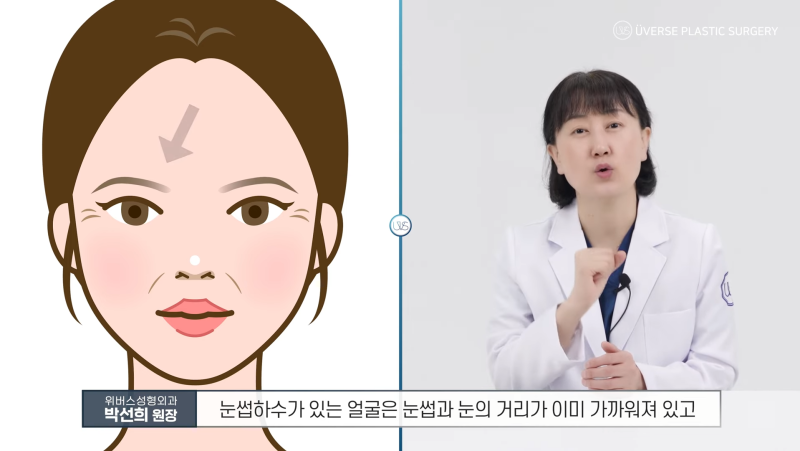
Focusing just on the face today, the tissues above our eyes, namely the forehead and eyebrows, also sag downwards.
In medical terms, this is referred to as brow ptosis and forehead ptosis.
A face with brow ptosis 1. already has a narrowed distance between the eyebrows and the eyes,
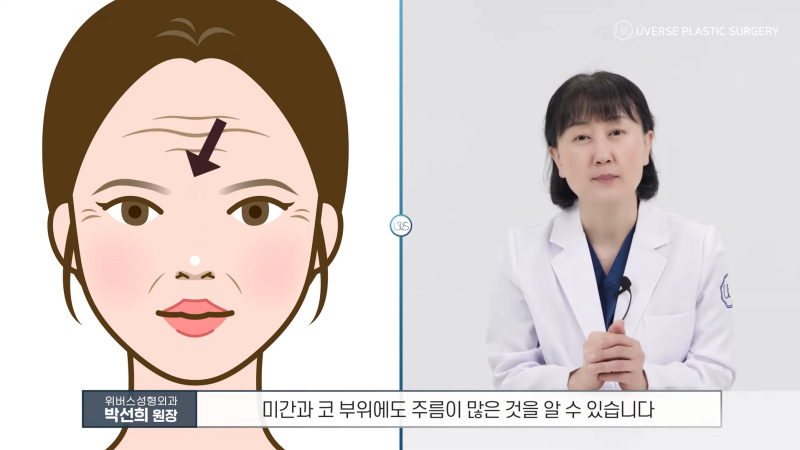
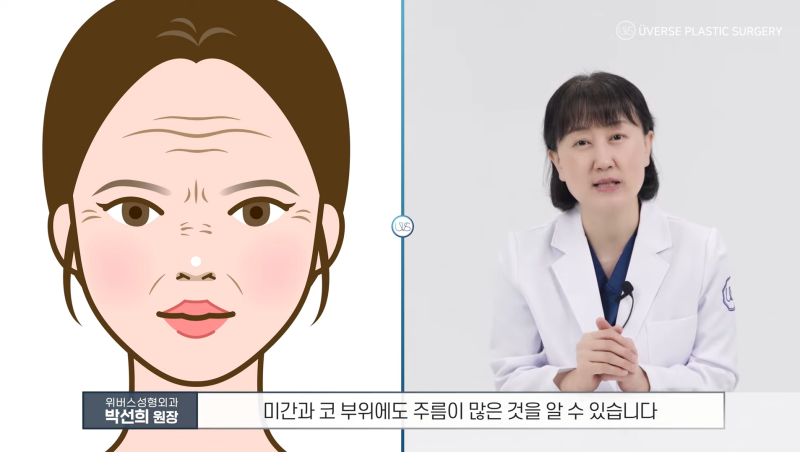
and for those with forehead ptosis, 2. they generally have many forehead wrinkles,
and 3. you can see many wrinkles in the glabellar (between the eyebrows) and nasal areas as well.
As mentioned last time, what happens if you undergo surgeries like upper blepharoplasty or incisional double eyelid surgery
when the forehead and eyebrows are sagging and the distance to the eyes is already close?
It is often described as a sunken or angry-looking eye.
No matter how well the upper blepharoplasty is performed, it will not result in an aesthetically perfect outcome.
In such cases, depending on the condition, it is better to sufficiently lift the area with a forehead lift,
adjust the position of the eyebrows, and simultaneously perform upper blepharoplasty to ensure a more aesthetically refined surgery.
Can't you get upper blepharoplasty if you have ptosis?

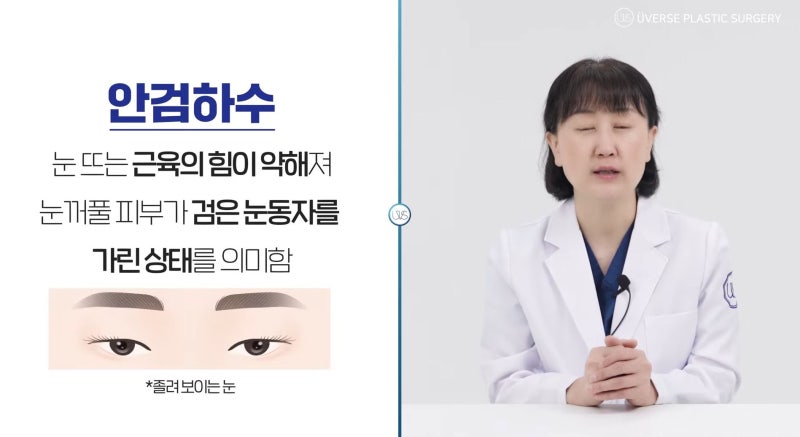
The second case is eyes with ptosis.
Simply put, ptosis refers to sleepy-looking eyes.
If surgery is performed haphazardly without closely examining whether the ptosis is simply due to sagging skin
or if there is an actual problem with the eye-opening muscles,
it can lead to the unfortunate result of making sleepy-looking eyes look even sleepier.
Therefore, we can say that side effects can only be prevented by accurately determining whether it is just a skin issue
or if proper ptosis correction is also required, and establishing the surgical plan and design accordingly.
Today, we tried our best to explain the content on YouTube that says, "Never get upper blepharoplasty."
Actually, the title was a bit too provocative, wasn't it?
Because too much context is missing from the beginning and end, to be precise,
it would be more accurate to say that people with these specific conditions should not insist solely on upper blepharoplasty.
Since there are various surgeries that can resolve the symptoms, you should switch to an alternative surgery,
or proceed with the surgery by supplementing it with other additional procedures.
We discussed complementary or alternative surgeries in our previous session,
so please refer to that video, and if you have any further questions, please leave a comment or contact our clinic.
Previous video ▼
https://www.youtube.com/watch?v=wMgXJHThGZI&t=260s
We will be back with more informative content next time😍
❤ If you want a quick consultation?



Frequently Asked Questions
Is it true that upper blepharoplasty should not be performed?
No, that's not true. The statement that upper blepharoplasty should "never be done" does not apply to all cases; it means that people with certain symptoms should be cautious because negative results can occur if the surgery is performed with an incorrect surgical plan or method. It is important to accurately diagnose the individual's condition.
Should upper blepharoplasty be avoided if I have eyebrow ptosis?
Yes, it is best to avoid it. If a person with eyebrow ptosis or forehead ptosis undergoes upper blepharoplasty, the space between the eyes and eyebrows may become closer, making the eyes look 'narrow' or 'angry,' which can lead to aesthetic dissatisfaction. In such cases, a forehead lift should be considered as well.
Can I not have upper blepharoplasty if I have ptosis?
Even if you have ptosis, upper blepharoplasty can be performed, but it is important to accurately determine whether it is simply due to skin sagging or a problem with the eye-opening muscles. If surgery is performed without a plan, sleepy-looking eyes may appear even sleepier, so it should be planned considering additional necessary surgeries such as ptosis correction.
What are other ways to improve droopy eyes besides upper blepharoplasty?
If eyebrow or forehead sagging is present, a forehead lift can sufficiently pull up the area, or surgery to adjust eyebrow position can be considered. If ptosis is present, ptosis correction surgery can be performed together to improve the eye shape. Various complementary surgeries are possible depending on the individual's symptoms.
Why do cases of aesthetic dissatisfaction occur after upper blepharoplasty?
Cases of aesthetic dissatisfaction, even when there are no functional problems after surgery, can primarily occur when only upper blepharoplasty is performed without considering other complex causes such as eyebrow ptosis, forehead ptosis, or ptosis. A plan that considers the overall harmony of the individual's face is important.