2026-05-29
UBER Plastic Surgery Explains! Can You Get Private Insurance Coverage for Rhinoplasty? (Is Health Insurance Possible for Plastic Surgery?)
UBER Plastic Surgery Explains! Can You Get Private Insurance Coverage for Rhinoplasty? (Is Health Insurance Possible for Plastic Surgery?) Hello! This is UBER Plastic Surgery. :) Today on "UBER Explains," we are going to tell you about plastic surgery procedures that can be covered by insurance! For those who have been worried about the cost of plastic surgery, today's "UBER Explains" will be full of great tips! Let's dive in with Dr. Seo Seung-jo of UBER Plastic Surgery!

UBER Plastic Surgery Explains! Can You Get Private Insurance Coverage for Rhinoplasty? (Is Health Insurance Possible for Plastic Surgery?)

Hello! This is UBER Plastic Surgery. :)
Today on "UBER Explains,"
we are going to tell you about plastic surgery procedures that can be covered by insurance!
For those who have been worried about the cost of plastic surgery,
today's "UBER Explains" will be full of great tips!
Let's dive in with Dr. Seo Seung-jo of UBER Plastic Surgery!

Although most people visit a plastic surgery clinic
for cosmetic purposes,
there are quite a few cases where patients visit
for rhinoplasty due to functional issues with their nose!

In these exact cases, because the purpose is medical treatment,
national health insurance coverage is possible if the conditions are met,
and if you have private health insurance (indemnity insurance),
it may also be possible to process a claim through your private insurance.
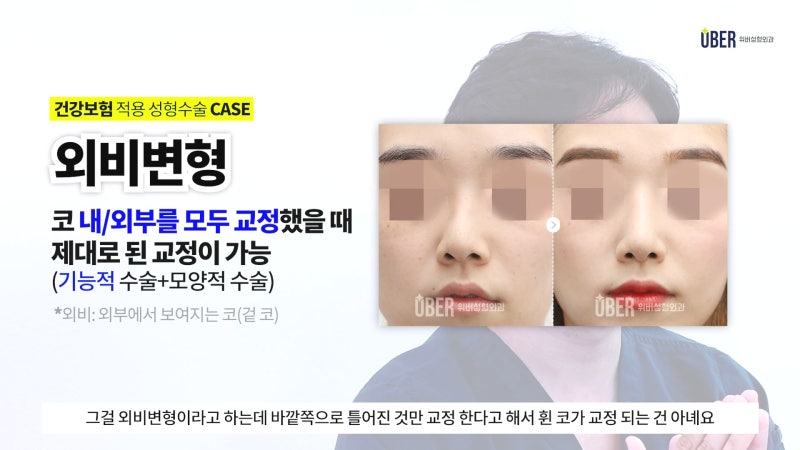
A prime example is patients who visit UBER Plastic Surgery
to correct a deviated nose.
This is called external nasal deformity.
Simply correcting the outward deviation
does not completely fix a deviated nose;
the internal deviation must also be corrected
to achieve proper deviated nose correction.
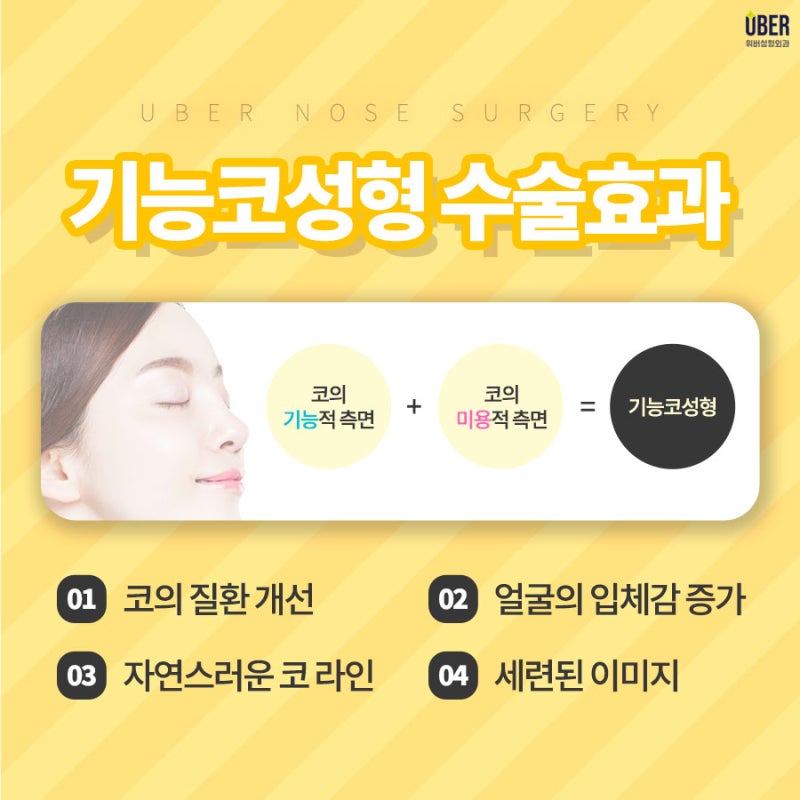
For the same reason, even in ENT (Ear, Nose, and Throat) clinics,
there are times when both the inside and outside of the nose must be corrected together
to allow for proper breathing,
so functional surgery is often combined with rhinoplasty.
Likewise, in plastic surgery clinics, while performing cosmetic surgery for shape,
there is a need to perform functional surgery simultaneously.


In conclusion, even if both the inside and outside of the nose are operated on together
for treatment purposes,
surgery deemed to be for cosmetic purposes is difficult to cover under health insurance,
while septoplasty, which is deemed to be for functional improvement,
can be covered by health insurance.
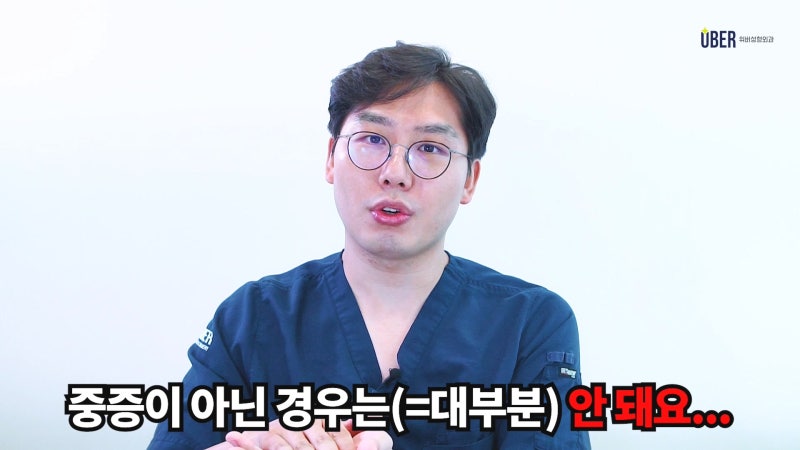
In the case of ptosis, severe ptosis
can restrict vision, so
when dividing the severity from 0 to 10,
if it is a severe ptosis corresponding to a 10,
health insurance coverage is possible with a doctor's medical certificate.
However, in most cases that are not severe, coverage is difficult.
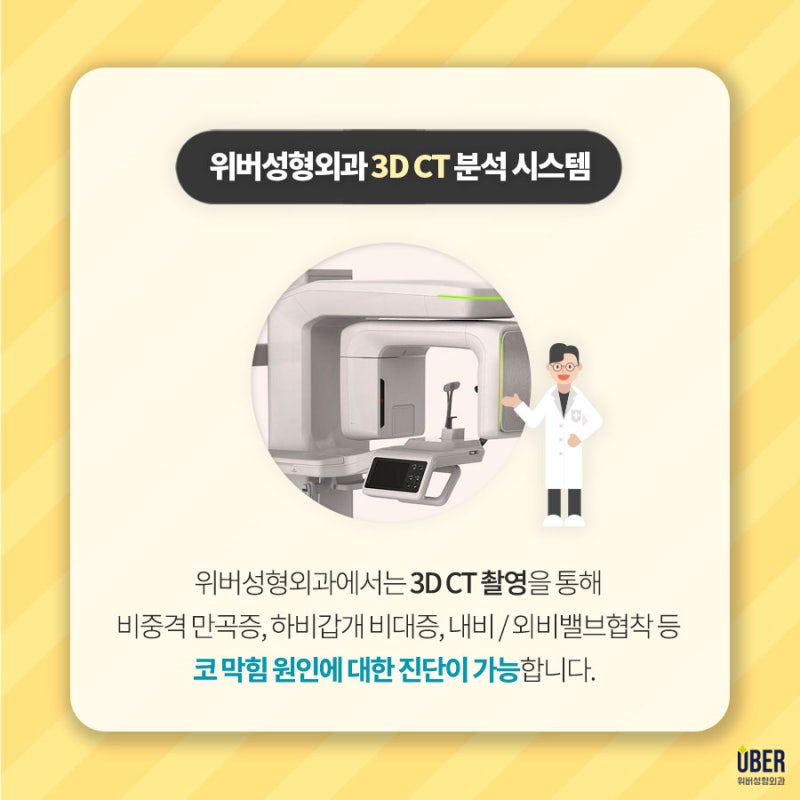
Then, what are the clear criteria for health insurance coverage?
The most important thing is the examination findings.
For septoplasty, a CT scan
must clearly show that the nose is deviated,
and for inferior turbinate hypertrophy surgery, findings that the inferior turbinate is enlarged
must be recorded on CT and endoscopy,
and also documented with photographs.

Based on these medical examination records
and when the patient's subjective, exact symptoms are clear,
health insurance coverage becomes possible.

Today, with Dr. Seo Seung-jo of UBER Plastic Surgery,
we covered the topic of "UBER Explains": Can plastic surgery be covered by health insurance?
Was this information useful to you?
For those who were wondering if plastic surgery can be covered by national health insurance or private indemnity insurance,
please remember that only functional surgeries, not cosmetic ones, are eligible,
and that an accurate diagnosis from a clinic and subjective symptoms are absolutely necessary!
Be sure to keep this in mind!

If you have any questions for UBER Plastic Surgery
or any curiosities about plastic surgery,
please leave a comment,
and don't forget to subscribe and like our YouTube channel!
Then, see you next time! Bye~
Frequently Asked Questions
Is nose surgery covered by private health insurance or national health insurance?
Yes, it is possible if the purpose is functional improvement. Cosmetic surgery is generally not covered by insurance, but septoplasty and other procedures to treat functional problems of the nose may be covered by national health insurance and private health insurance if the conditions are met.
What are the criteria for receiving insurance benefits for deviated nose correction?
Objective examination findings such as CT scans are required. It must be confirmed by CT that the nose is clearly deviated, and national health insurance coverage is possible when the medical data based on this and the patient's subjective symptoms match.
Is ptosis surgery covered by national health insurance?
Yes, it is possible only for severe ptosis that restricts vision. If it is severe ptosis corresponding to 10 when the severity is divided from 0 to 10, national health insurance is applied under a doctor's diagnostic opinion, but it is difficult to apply in general cases.
What are the essential conditions for insurance coverage for inferior turbinate hypertrophy surgery?
Objective records indicating that the inferior turbinate is large are essential. Findings of inferior turbinate hypertrophy must be recorded on CT scans and endoscopic examinations, and the condition must be clearly documented with photographic data to receive national health insurance benefits.