2026-05-29
Types of Revision Rhinoplasty Explained by Dr. Seo Seung-jo of Uber Plastic Surgery! Let's Look at the Causes Together, Such as Inflammation, Contracture, and Dissatisfaction with the Shape!
Types of Revision Rhinoplasty Explained by Dr. Seo Seung-jo of Uber Plastic Surgery! Let's Look at the Causes Together, Such as Inflammation, Contracture, and Dissatisfaction with the Shape! Hello. This is Uber Plastic Surgery! Today, following our discussion on the timing of revision rhinoplasty, we are back with our second topic: the types of revision rhinoplasty! There are two main causes for revision rhinoplasty: contracture due to inflammation and dissatisfaction with the shape. The second
Types of Revision Rhinoplasty Explained by Dr. Seo Seung-jo of Uber Plastic Surgery! Let's look at the causes together, such as inflammation, contracture, and dissatisfaction with the shape!

Hello. This is Uber Plastic Surgery!
Today, following our discussion on the timing of revision rhinoplasty,
we are back with our second topic: the types of revision rhinoplasty!

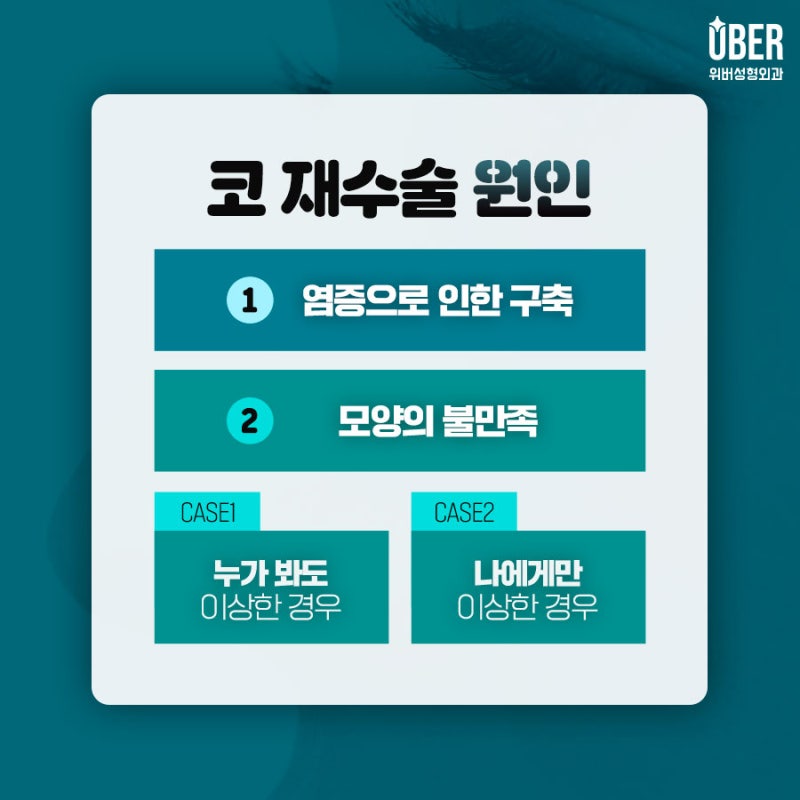
There are two main causes for revision rhinoplasty.
Contracture due to inflammation and dissatisfaction with the shape.
The second type is further divided into two categories.
First, when it looks unnatural to everyone,
and second, when it looks unnatural only to your own eyes.
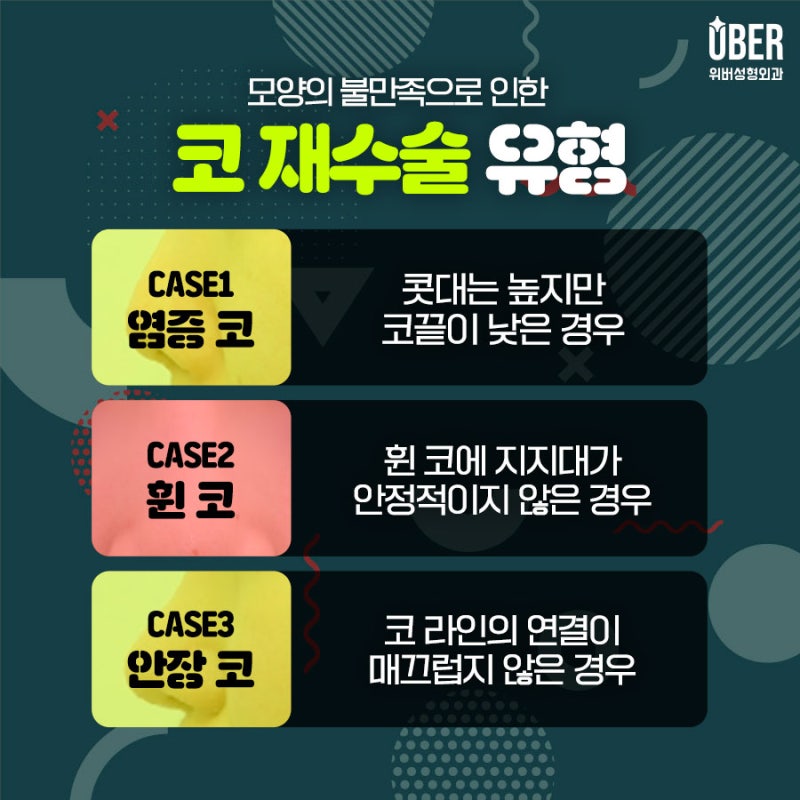
Today, we will talk about these three cases.
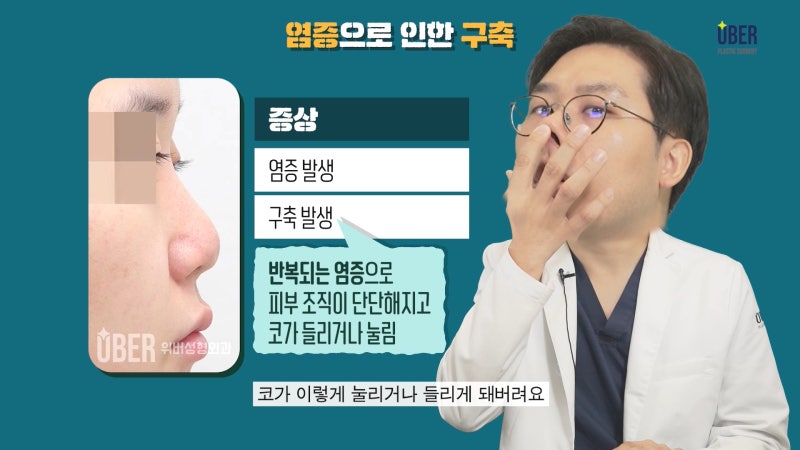
First, the problem with a contracted nose due to inflammation is
that basically, the existing cartilages have melted and collapsed.
If this condition continues and repeats,
the skin tissue hardens, causing the nose to become upturned or depressed.
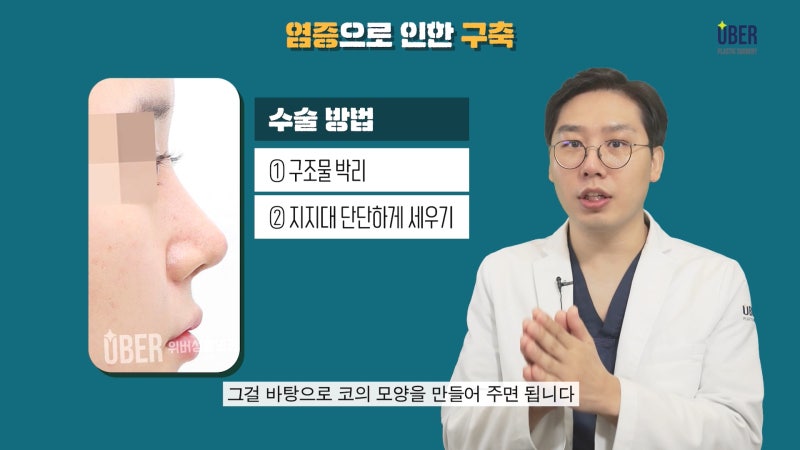
To correct this, the structures of the nose must be
carefully dissected to build a solid support structure,
and based on that, the shape of the nose is rebuilt.
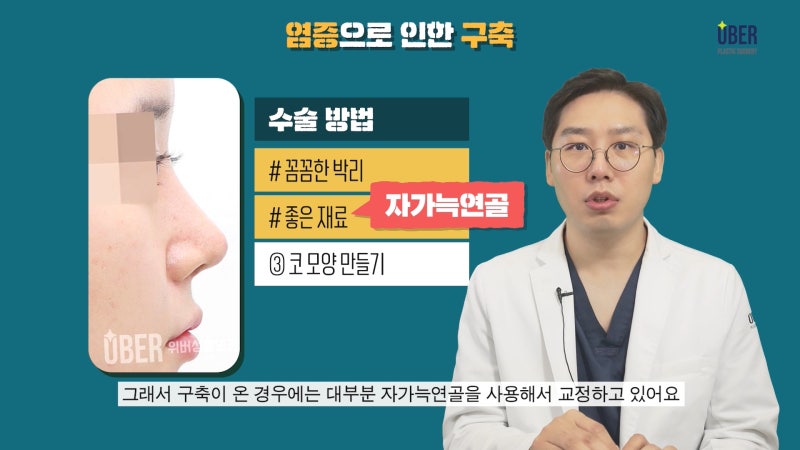
At this time, the two most important things are
dissection and using good materials.
Therefore, for noses with contracture, we mostly
perform revision surgery using autologous rib cartilage.

Second, among the types of noses that can cause
dissatisfaction with the shape, there is the short nose.
This is a case where the nasal bridge was elevated with an implant,
but technically, the nasal tip was not properly elevated.
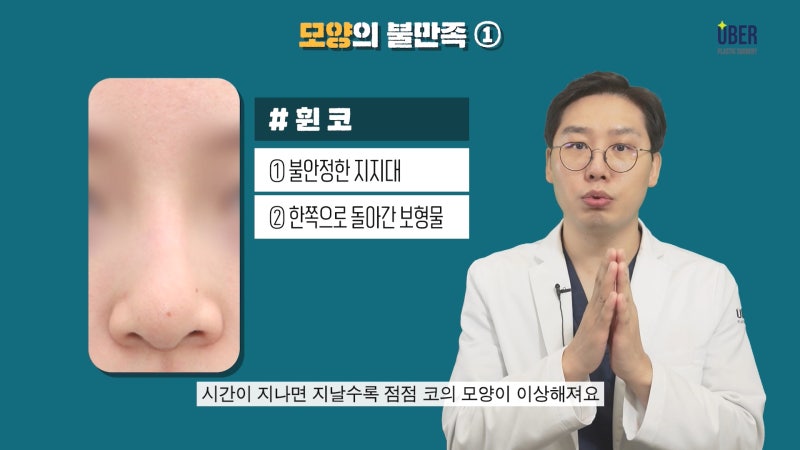
Next is a deviated nose where the implant is bent
or the nostrils are asymmetrical and crooked.
This happens when a support structure is not stably built
on a nose that was originally deviated,
characterized by the implant not being in the center of the nose when viewed from the front,
but rather taking on a slightly curved shape.
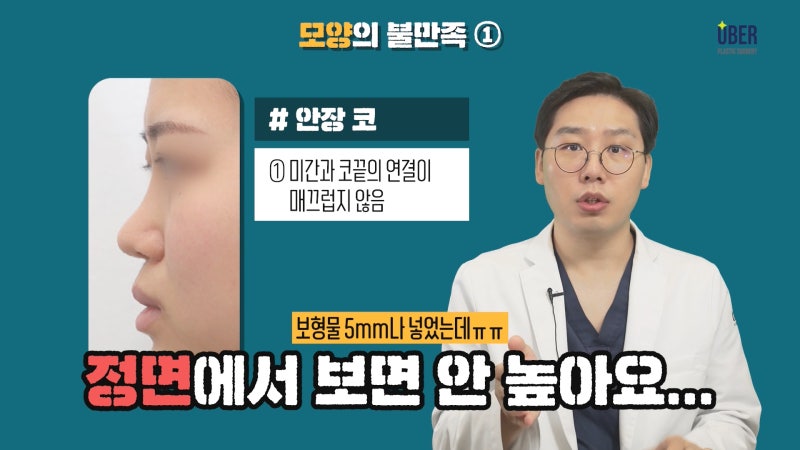
Next is the saddle nose.
This is when the line of the nose does not connect smoothly from the glabella to the nasal tip.
Even if a high implant was inserted,
it is characterized by not having a significant effect when viewed from the front.
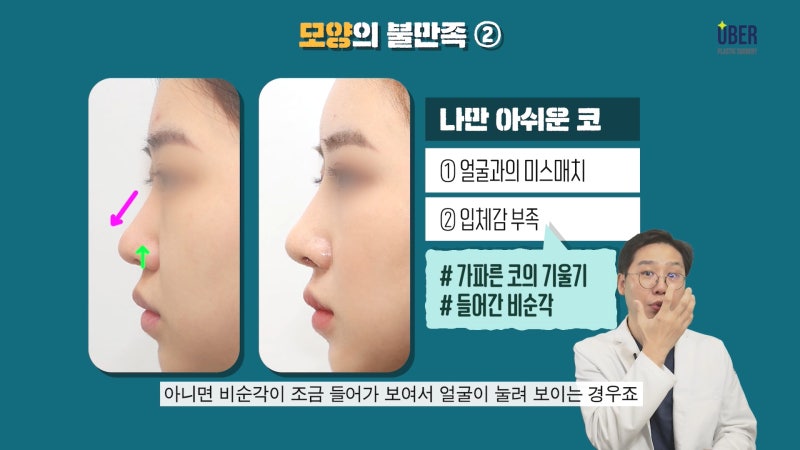
Lastly, there are cases where it looks fine to others,
but is unsatisfactory only to your own eyes.
In this type, the nose itself is pretty,
but it mismatches the face, or the slope of the nose is too steep,
and the nasolabial angle is sunken, making it look lacking in three-dimensionality.

Ultimately, the key to a successful rhinoplasty
is a nose that is harmonious with the face!
If you have any questions about revision rhinoplasty
or are currently dissatisfied with your nose,
please visit Dr. Seo Seung-jo at Uber Plastic Surgery,
and we will kindly provide you with a consultation!

If today's "Uber Explains" was informative,
please subscribe to our YouTube channel and hit the like button!
Then, see you next time! Bye~
Frequently Asked Questions
What are the most common reasons for revision rhinoplasty?
Broadly, there are two main reasons: contracture due to inflammation and dissatisfaction with the nose shape. Dissatisfaction with the shape can be further subdivided into cases where it is objectively abnormal and cases where only the individual is dissatisfied.
How is revision surgery performed for a contracted nose due to inflammation?
It is performed by creating a strong support structure using precise dissection and good materials. For a contracted nose, autologous costal cartilage is mostly used to rebuild the nasal structures and correct the shape.
Is a short nose with a high bridge but an unsatisfactory tip also a candidate for revision surgery?
Yes, that's correct. A short nose is a type that occurs when the nasal bridge is heightened with an implant, but the tip could not be properly raised due to technical limitations. It requires reinforcing the tip's support to correct it according to the overall facial proportions.
What causes the nose to appear crooked when viewed from the front?
This is because the support structure was not stably placed in an already crooked nose. As a result, the implant is not centered in the nose and appears slightly deviated, or the nostrils look asymmetrical.
What could be the reason for dissatisfaction even if the nose itself is pretty?
It could be because the shape of the nose does not harmonize with your face. If the angle of the nose is too steep or the nasolabial angle is recessed, making it look less立体, it can create a mismatch with the face.