2026-05-29
Uber Plastic Surgery Revision Rhinoplasty
#RevisionRhinoplasty #UberRhinoplasty #GangnamRhinoplasty #DeviatedNose #LongNose #Septum #BulbousNoseSurgery #BulbousNoseRhinoplasty #Gangnam #FirstRhinoplasty #ProtrudingMouthRhinoplasty #Alar #AlarReduction #Septoplasty #Cartilage #Silicone #RibCartilage #NonImplantRhinoplasty #UberPlasticSurgery Rhinoplasty is a surgery many people undergo! The nose, the center of the face that differs for each individual, occupies the middle position, so even a slight change plays an important role in impro
#RevisionRhinoplasty #UberRhinoplasty #GangnamRhinoplasty #DeviatedNose #LongNose #Septum #BulbousNoseSurgery #BulbousNoseRhinoplasty #Gangnam #FirstRhinoplasty #ProtrudingMouthRhinoplasty #Alar #AlarReduction #Septoplasty #Cartilage #Silicone #RibCartilage #NonImplantRhinoplasty #UberPlasticSurgery
Rhinoplasty is a surgery many people undergo!
The nose, the center of the face that differs for each individual, occupies the middle position, so even a slight change plays an important role in improving one's image.
Many people hastily undergo rhinoplasty for a change in their image.
However, there are many cases where revision rhinoplasty is performed for various reasons after the initial surgery.
The most common reasons for revision rhinoplasty are post-operative dissatisfaction, such as inflammation, aesthetic deformity, or general dissatisfaction.
When performing revision surgery for these reasons, it must be carried out after identifying the cause based on the specific problems present.
What is Uber Revision Rhinoplasty?
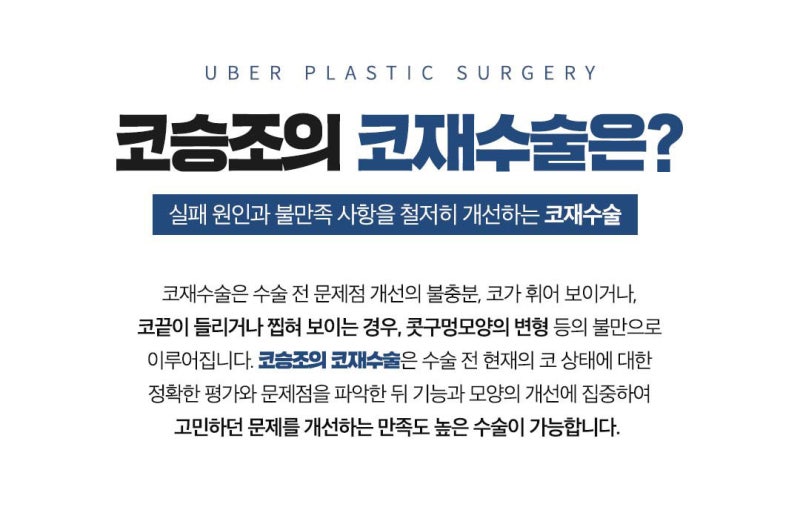
Uber Plastic Surgery's revision rhinoplasty thoroughly improves the outcome by finding the causes of failure and dissatisfaction.
Revision rhinoplasty is performed due to dissatisfaction in cases such as asymmetrical or altered nostrils, a deviated nasal bridge or visible implant, a pinched nasal tip or enlarged tip, a short and upturned tip or a long arrow-shaped nose, nasal congestion, rhinitis, or a deviated septal cartilage.
Uber Plastic Surgery's revision rhinoplasty involves an accurate evaluation and identification of problems regarding the current state of the nose prior to the revision surgery.
We focus on improving both function and aesthetics to resolve the issues and deliver highly satisfactory results.

Advantages of Uber Revision Rhinoplasty!
At Uber Plastic Surgery, not only do we address the shape of the nose, but also cases where the extended septum has collapsed and deviated.
This can cause nostril asymmetry, a short nose, a long nose, a deviated nose, or nasal congestion.
We improve all of these functional problems to provide a highly satisfactory surgery.
1. Correction of Nostril Asymmetry
In the case of asymmetrical nostrils, we correct the deformity of the alar cartilage and use appropriate supportive cartilage grafts to correct the strength and direction of the nasal tip support, creating symmetrical nostrils.
2. Improvement to a Beautiful Nasal Tip
By repositioning the alar cartilage and appropriately removing and repositioning the scar tissue at the nasal tip,
we improve the nasal tip to be slim while correcting any pinched appearance.
3. Correction of a Deviated Nasal Bridge
If the extended septum has collapsed and deviated, or if the silicone implant has shifted to one side causing deviation,
we correct it by repositioning the caudal septum and using an implant that fits the width of the nasal bones.
4. Improvement of Short and Long Noses
By accurately and evenly removing the scar tissue at the nasal tip and reconstructing the support structures of the nasal tip skin, cartilage, and mucosa,
we can prevent the nasal tip from shortening or drooping over time.
5. Restoration of Nasal Function
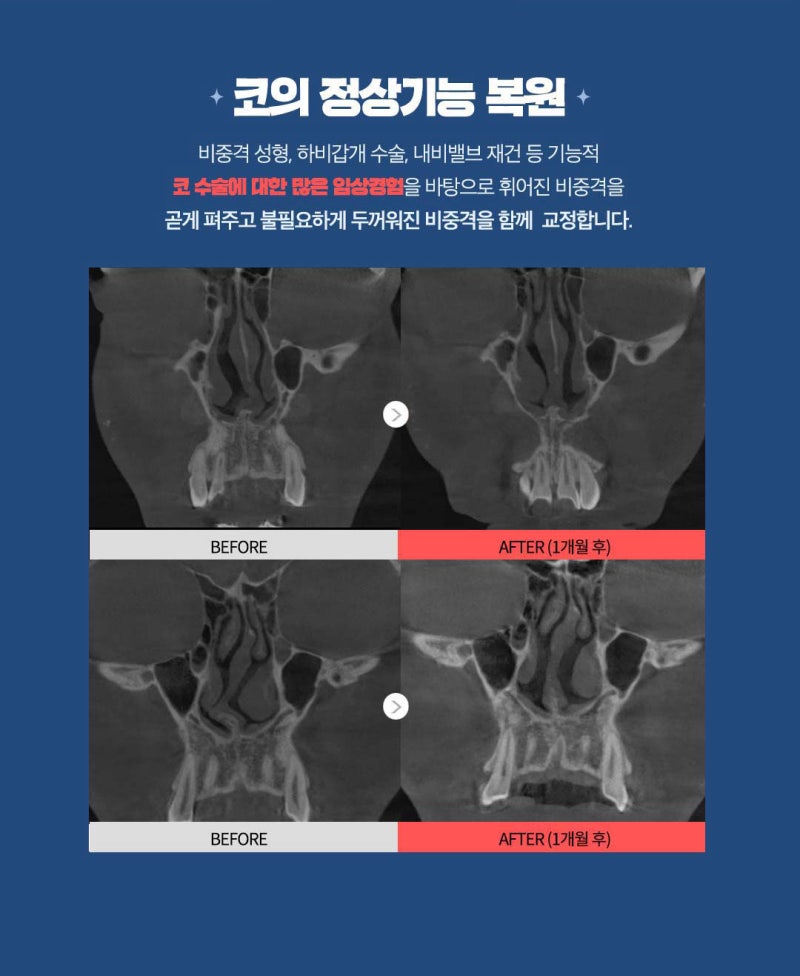
Through functional rhinoplasty procedures such as septoplasty, inferior turbinate reduction, and internal nasal valve reconstruction,
we straighten the deviated septum and simultaneously correct an unnecessarily thickened septum.
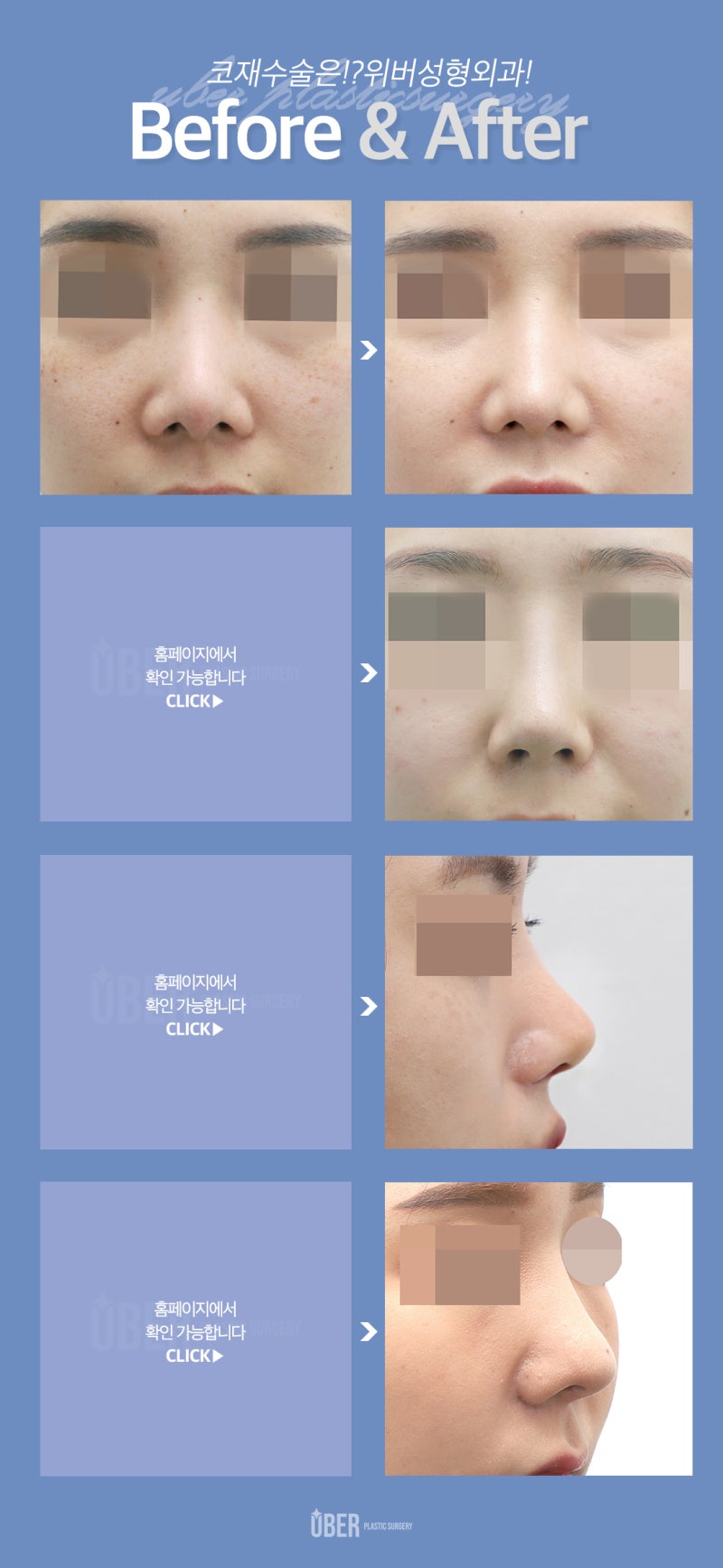
Uber Plastic Surgery identifies the problem through a thorough analysis of the causes of failure from the initial surgery
and then proposes the appropriate surgical method.
We also strive to create a nose with minimal deformation over time.
If the cartilage used in the first surgery can be reused, we avoid unnecessary cartilage harvesting
and reposition it according to the condition of the nose to create a natural shape.
Frequently Asked Questions
What are the main reasons for revision rhinoplasty?
Inflammation, aesthetic deformities, and dissatisfaction with the surgical outcome are the biggest reasons. Revision surgery is considered when nostrils are asymmetrical, implants are visible, the nasal tip is pinched, or functional problems such as nasal congestion occur.
Can asymmetrical nostrils be corrected with revision surgery?
Yes, correction is possible. By correcting the deformity of the nasal tip cartilage and implanting appropriate support cartilage to adjust the strength and direction of the nasal tip support, the symmetry of both nostrils is achieved.
Can functional problems like nasal congestion or rhinitis be treated at the same time?
Yes, functional problems can be treated simultaneously with aesthetic improvements. Nasal function is restored by straightening a deviated septum and correcting a thickened septum through septoplasty, inferior turbinate surgery, and internal nasal valve reconstruction.
Do I always need to harvest new cartilage for revision surgery?
No. If the cartilage used in the first surgery is still usable, unnecessary cartilage harvesting is not performed. We rearrange the existing cartilage to create a natural shape that suits the patient's current nasal condition.
Can a shortened nose or an elongated hooked nose be improved?
Yes, it can be improved. By accurately removing scar tissue from the nasal tip and firmly reconstructing supporting structures such as skin, cartilage, and mucous membranes, the nasal tip is corrected so that it does not shorten or droop again over time.