2026-05-18
Incisional Double Eyelid + Ptosis Correction + Epicanthoplasty + Upper Eyelid Fat Removal Real Case Review
This is a complex incisional double eyelid surgery case of a patient who had a strong sleepy impression due to thick upper eyelids, a strong epicanthal fold, and sagging skin. Since the non-incisional (suture) method had limitations, incisional double eyelid surgery, ptosis correction, epicanthoplasty, and fat removal were performed together. At 2 weeks post-op, the line stabilized, and at 3 months, the swelling subsided, completing a clear and natural semi-out fold.
#DoubleEyelidSurgery #IncisionalDoubleEyelid #PtosisCorrection #Epicanthoplasty #EyeSurgery #ThickEyelids #EyelidFatRemoval #EpicanthalFoldImprovement #SleepyEyesImprovement #EyeShapeImprovement #SemiOutFold
#OutFoldDoubleEyelid #ClearEyes #NaturalEyes #EyeLineCorrection #EyeSurgeryReview #CustomEyeSurgery #CaseAnalysis #EyeSurgeryRecommendation
Hello~
💎your beauty universe! This is Dr. Shim Jeong-hwan from Weverse Plastic Surgery :)💎
Today, I would like to review an incisional double eyelid surgery case.

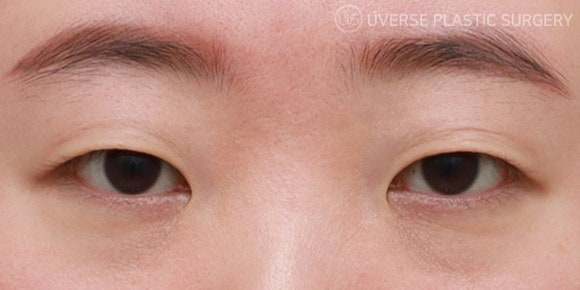
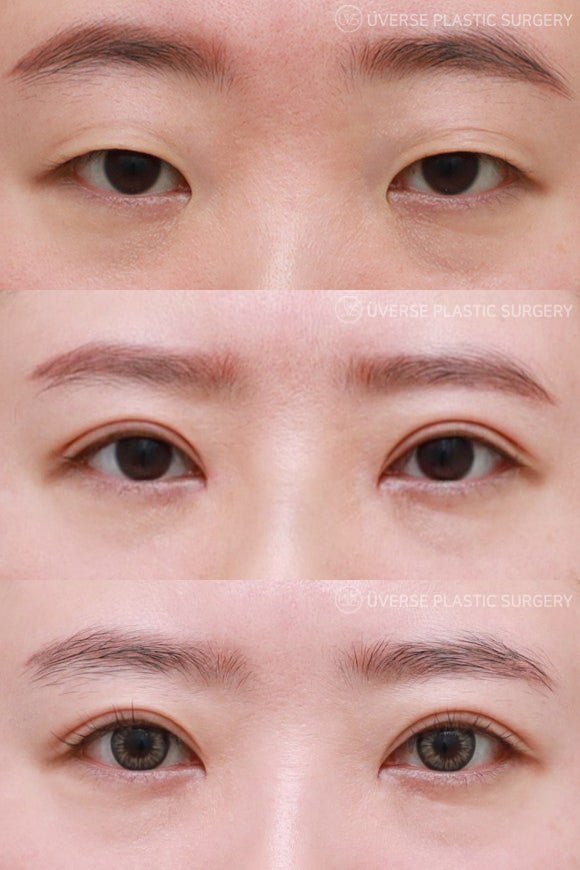
Before Surgery
This patient was having eye surgery for the first time,
and overall, her upper eyelids were thick and accompanied by sagging skin.
In particular, the front epicanthal fold extended downwards, covering the area in a rounded shape,
creating a stuffy and sleepy-looking impression.
Additionally, she had a habit of using her forehead when opening her eyes, so her eyebrows were observed to be raised.
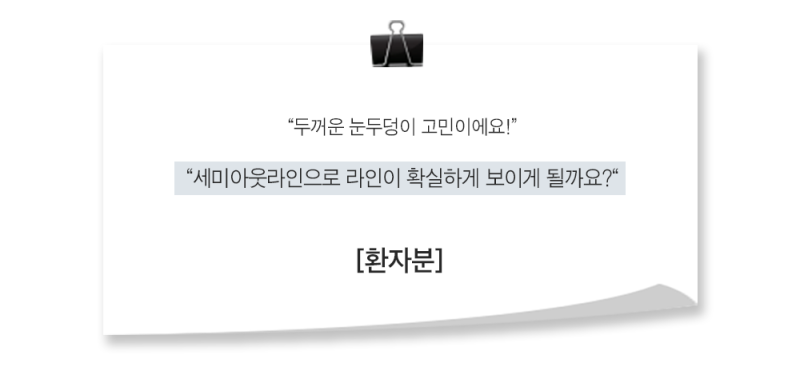
The patient wanted a clearly visible line like a semi-out fold or an out fold,
but her existing eye structure made it difficult to form naturally.
✔️Thick upper eyelids + accompanied by sagging skin
✔️Difficulty forming the front line due to strong epicanthal folds
✔️Sleepy eyes + habit of using the forehead
✔️A case where it is difficult to achieve the desired line with a non-incisional method
Diagnosis and Surgical Method
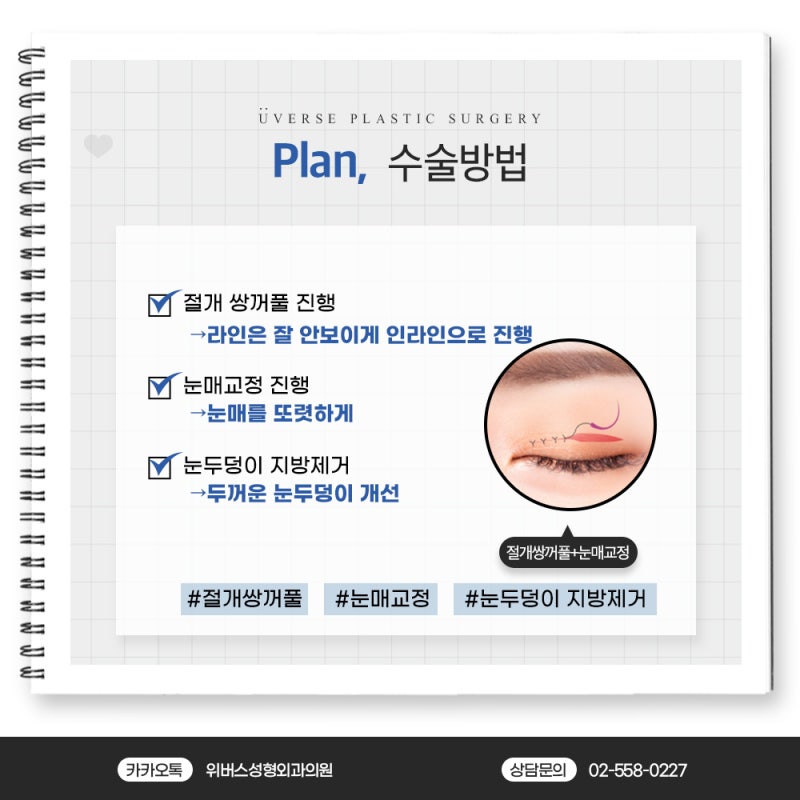
This was a case with sagging upper eyelid skin, thick eyelids with a lot of fat,
and strong epicanthal folds.
Because the non-incisional (suture) method has limitations under these conditions,
we proceeded with a complex correction based on incisional double eyelid surgery.
The surgery was performed as follows:
✔️Incisional Double Eyelid Surgery → Clear line fixation without loosening
✔️Ptosis Correction → Improvement of sleepy eyes + completion of clear eyes
✔️Epicanthoplasty → Alleviation of epicanthal folds and securing the front line
✔️Fat Removal → Improvement of thick upper eyelids
2 Weeks Post-Op
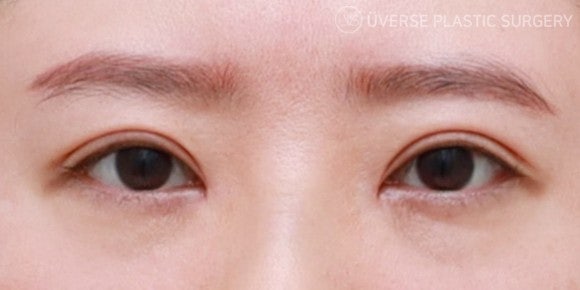
At 2 weeks post-op, some swelling still remains,
but you can see the line stably settling into place.
The area where the epicanthal fold was opened has improved from the previous rounded, covered feeling,
and a semi-out fold shape where the front line starts naturally is forming.
As it was performed with an incision, you can also see that the line is maintained clearly.
In addition, the thickness above the eyes has been greatly improved due to fat removal,
and the use of the forehead when opening the eyes has decreased due to the ptosis correction effect, with the eyebrow position naturally coming down.
✔️Fast line stabilization compared to swelling
✔️Refreshing eye shape due to the epicanthoplasty effect
✔️Clearer impression due to reduced upper eyelid volume
✔️Decreased use of the forehead due to improved eye-opening strength
3 Weeks Post-Op
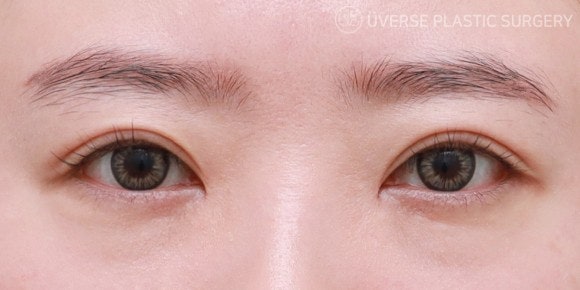
At 3 months, most of the swelling has subsided,
and the double eyelid line has settled more clearly and naturally.
The line is stably maintained with a sense of depth,
and overall, a soft and natural eye shape has been completed.
The scar from the epicanthoplasty has also faded a lot, recovering to a level where it is barely noticeable.
Due to the ptosis correction effect, the eye-opening strength has improved,
maintaining a state where the eyes can be opened comfortably without using the forehead.
Refreshing eyes with a semi-out fold
Natural alleviation of epicanthoplasty scars
Maintenance of functional improvement (eye-opening strength)
This case goes beyond simply creating a double eyelid line;
👉 it is a good example of surgery that changes the impression by improving the eye structure itself.
If you want a change that alters the line, function, and even your impression,
an accurate surgical design tailored to your individual eye conditions is the most important.
Before Surgery / 2 Weeks Post-Op / 3 Months Post-Op
✨Want to know more about Weverse Plastic Surgery? ✨


Frequently Asked Questions
When is incisional double eyelid surgery needed instead of the non-incisional method?
When there is sagging upper eyelid skin, thick eyelid fat, and strong epicanthal folds together, the non-incisional method has limitations. Under these conditions, it is appropriate to firmly fix the line based on incisional double eyelid surgery and proceed with additional corrections together.
Can thick eyelids also have a clear line?
Yes, it is possible. In this case, upper eyelid fat removal was performed along with incisional double eyelid surgery to reduce thickness, and as a result, the line was formed more clearly, and we could confirm a change where the impression became much more refreshing.
What surgery is needed if the epicanthal folds are strong?
When the epicanthal fold covers the front line in a rounded shape, giving a stuffy impression, epicanthoplasty is needed together. In this case as well, the epicanthal fold was alleviated with epicanthoplasty to secure the front line, and a refreshing eye shape in the form of a semi-out fold could be formed.
Does the habit of using the forehead when opening the eyes also improve?
Yes, it can be improved with ptosis correction. This patient had a habit of opening her eyes with her forehead due to weak eye-opening strength, but after ptosis correction, we could confirm functional improvement where the use of the forehead decreased and the eyebrow position naturally came down.
How does the recovery progress after surgery?
At 2 weeks post-op, some swelling remains, but the line begins to settle stably. At 3 months, most of the swelling subsides, the line settles clearly and naturally, and the scar from the epicanthoplasty fades to the point where it is barely noticeable.
Does epicanthoplasty leave a lot of scarring?
Based on this case, at 3 months, the scar faded a lot and recovered to a level where it is barely noticeable. However, the recovery speed and the degree of scarring may vary depending on individual skin conditions.