2026-05-29
Rhinoplasty: What Cartilage Can Replace Ear Cartilage?
#Rhinoplasty #EarCartilage #NoseSurgery #RevisionRhinoplasty #SeptalCartilage #ProtrudingMouthNose #ShortNose #LongNose #HumpNose #AutologousRibCartilageRhinoplasty #AutologousRib #Uber #SeoSeungJo #ShimJungHwan #ParkSunHee #GangnamRevisionRhinoplasty Hello~💎your beauty universe! I am Dr. Shim Jung-hwan, head director of Uber Plastic Surgery :)💎 The nose is a facial feature that provides dimension, and the line from the glabella to the nasal tip must be beautiful to create a three-dimensional an

#Rhinoplasty #EarCartilage #NoseSurgery #RevisionRhinoplasty #SeptalCartilage #ProtrudingMouthNose #ShortNose #LongNose #HumpNose #AutologousRibCartilageRhinoplasty #AutologousRib #Uber #SeoSeungJo #ShimJungHwan #ParkSunHee #GangnamRevisionRhinoplasty
Hello~
💎your beauty universe! I am Dr. Shim Jung-hwan, head director of Uber Plastic Surgery :)💎
The nose is a facial feature that provides dimension, and the line from the glabella to the nasal tip
must be beautiful to create a three-dimensional and distinct impression.
Implants and materials used in rhinoplasty vary widely, including silicone, ear cartilage, septal cartilage,
rib cartilage, and more.
Typically, ear cartilage is most commonly used for the nasal tip.
Ear cartilage is harvested from behind the ear. While it is less rigid than septal cartilage,
it is an excellent material because it is similar to the nose, rounded, and elastic.
However, there are occasional cases where there is a lack of ear cartilage.
In cases of revision rhinoplasty or insufficient ear cartilage,
let's find out what materials can be used as alternatives.
What materials can replace ear cartilage?

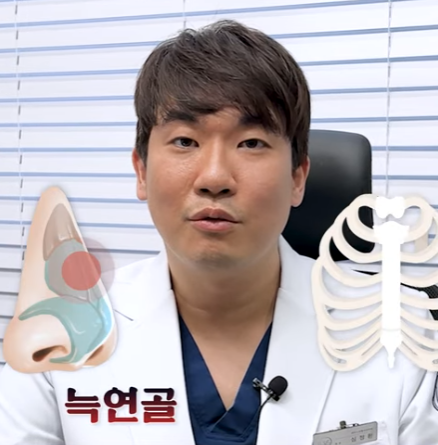

Generally, it is rare for someone to have completely depleted their ear cartilage
to the point of insufficiency,
but if ear cartilage is unavailable, the cartilages you can use are septal cartilage and
rib cartilage. You can consider these as the only options, and these two cartilages are carefully carved
to be softer and rounder like ear cartilage, for the purpose of placing on the nasal tip
and utilized in this way.
https://www.youtube.com/shorts/7UrvmzMnG_g
Today, we learned about alternative materials for ear cartilage.
We will return next time with even more informative content.
🧡If you want a quick consultation?



Frequently Asked Questions
Why is ear cartilage mainly used for the nasal tip during nose surgery?
Yes, because ear cartilage is similar to nasal tissue and has elasticity. Ear cartilage, harvested from behind the ear, is less rigid than septal cartilage, but its round and soft characteristics make it an excellent material for creating a natural-looking nasal tip.
If ear cartilage is insufficient during revision rhinoplasty, what materials can be used as alternatives?
Septal cartilage and costal cartilage can be used as alternative materials. If ear cartilage has already been depleted or is insufficient, these two types of cartilage are harvested and meticulously shaped to be soft and round, similar to ear cartilage, then used for the nasal tip.
Are septal cartilage and costal cartilage, used as ear cartilage substitutes, placed directly on the nasal tip as they are?
No, they are shaped to resemble ear cartilage. Septal cartilage or costal cartilage is naturally harder and different in shape than ear cartilage, so before being placed on the nasal tip, they undergo a sculpting process to make them softer and rounder, similar to ear cartilage, before the surgery proceeds.
Where is ear cartilage usually harvested from?
Ear cartilage is harvested from behind the patient's ear. Since the cartilage is obtained by making an incision behind the ear, the scar is not easily visible, and the harvested cartilage is usefully employed to raise or shape the nasal tip.