2026-05-29
Confused by the many types of lifting procedures? A plastic surgeon's comprehensive guide to lifting!😎
This guide from a plastic surgeon clarifies the many types of lifting procedures, from thread lifts to mini lifts and full facelifts, explaining each method and its ideal candidates.
#ThreadLift #MiniLift #Facelift #MidfaceLift #MiniFacelift #LiftingTypes #LiftingRecommendations #PeachLift #SilhouetteSoft #MintThread #YouthfulSurgery #YouthfulProcedure #AntiAging #GangnamStation #WeversePlasticSurgery
Hello everyone~
🙌Your beauty universe! This is Weverse Plastic Surgery :)🙌
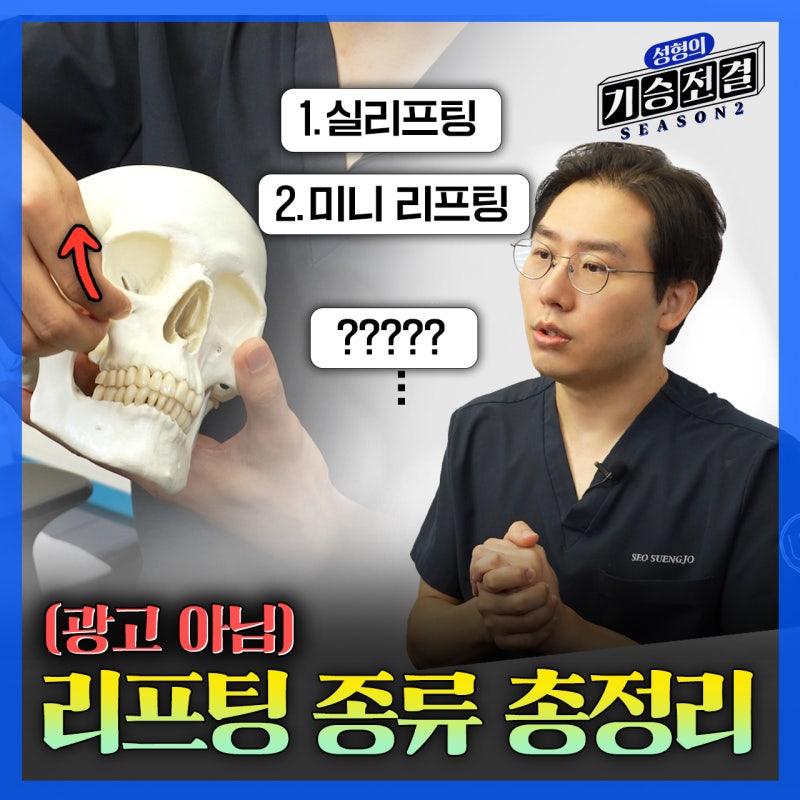
Q: There are so many types of lifting procedures, aren't they all the same?
After COVID-19, the names of lifting procedures became much more specialized.
If you look at the websites of various clinics, you'll see a wide range of terms.
To help you understand, I've organized the concepts of each.
First, a thread lift is a method of suspending the skin with threads.
It's similar to gently pulling up the skin with your fingertips to defy gravity,
so you can think of it as a light pulling concept.
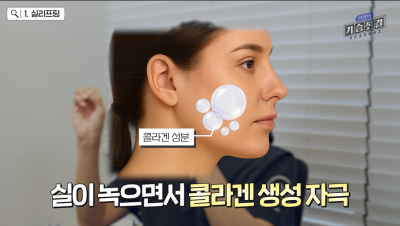
For example, imagine your skin's condition when you lie down; that's the effect of a thread lift.
Since it's suitable for people who don't need a strong lift,
dissolvable threads are used.
Because a thread lift is a procedure that only suspends the skin, not fixes it,
there's no need to use non-dissolvable threads.
As time passes and the threads dissolve, the collagen tissue remaining in their place
helps maintain some degree of effect afterward.
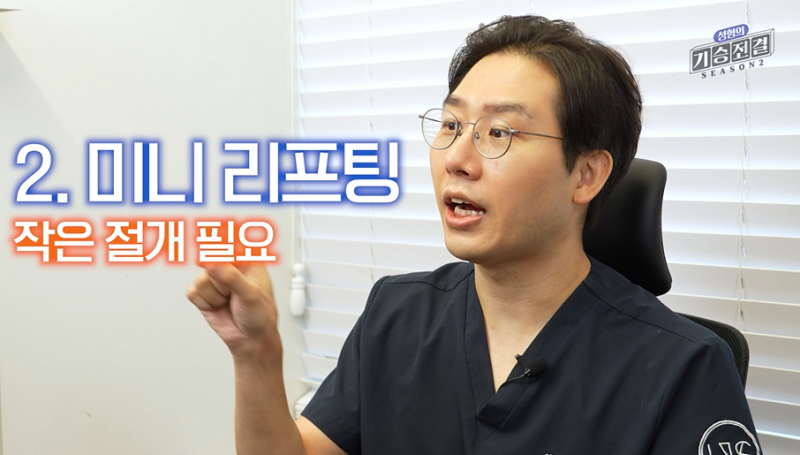
Next, a mini lift is a procedure that involves an ‘incision’.
It involves pulling up and fixing the SMAS layer to a firm, immobile tissue.
Fixation is performed on the scalp fascia or the fascia in front of and behind the ear.
If the SMAS layer is still firm,
the underlying tissue will follow when pulled upwards.
However, if the tissue is too thin, it can tear,
so we recommend this procedure for relatively younger individuals.
Q: Why is the mini lift incision only 1cm?
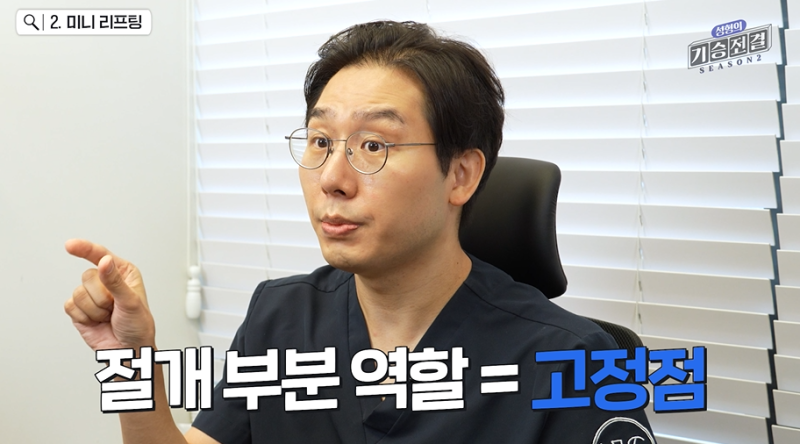
A 1cm incision is simply the minimum incision
to find the fixation point.
Also, the process of cutting the ‘retaining ligaments’
cannot be done with just a 1cm incision
and doesn't have much significance.
Cutting the retaining ligaments means cutting the suspended tissue
to pull more, but
even if you pull a lot, there's not much effect without accompanying skin excision.
Sometimes, it's stated that ‘retaining ligaments are cut in a mini lift’,
but in such cases, it actually involves a 4-5cm incision.
At Weverse Plastic Surgery, we use the term ‘mini’
based on the meaning that the incision is in a relatively inconspicuous location,
and we perform the surgery accordingly.
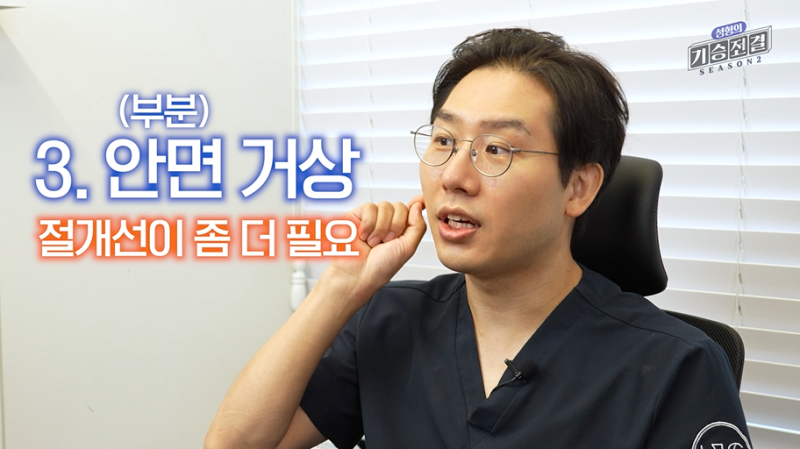
If the incision is longer than a mini lift,
it's called a partial facelift (partial rhytidectomy).
In this case, the incision must extend to the front of the ear to allow for skin excision,
and a larger area of lifting becomes possible depending on the incision length.
A longer incision line ultimately means a higher lifting strength,
and you can expect more extensive tissue fixation, fat repositioning, and skin excision.
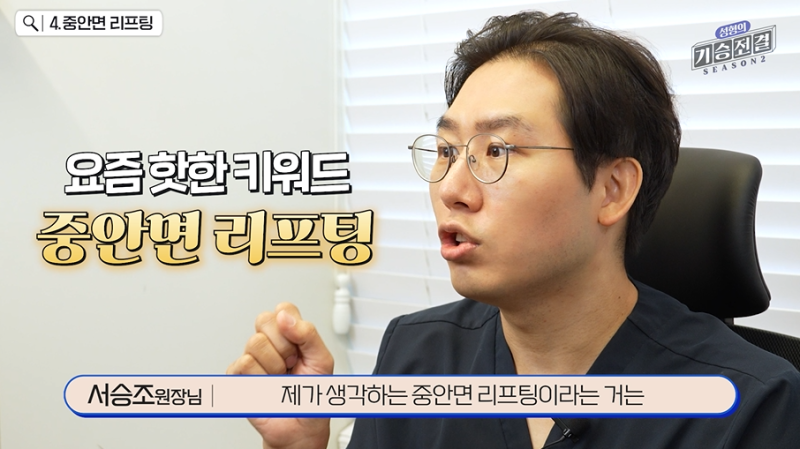
‘Mid-face Lift’
More precisely, it can be called a ‘mid-face fat lift’,
and it's a procedure that lifts and fixes the fat above the anterior cheek in an upward direction.
Pulling it sideways would only widen the face,
so lifting it in a vertical direction is key.
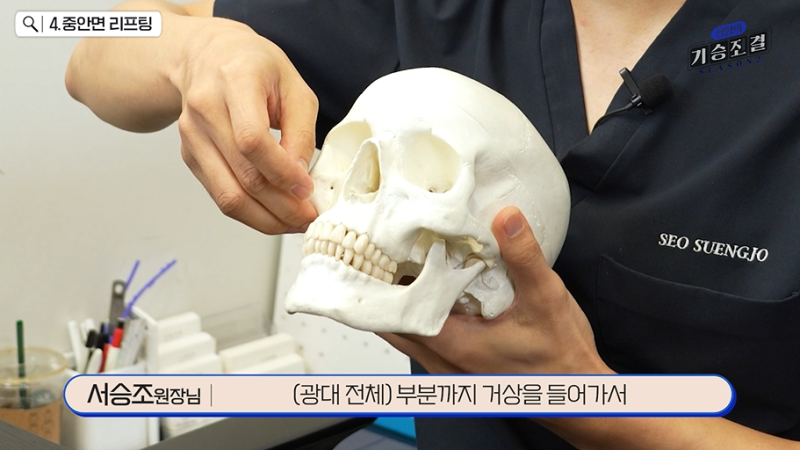
Therefore, it is mostly approached using a lower blepharoplasty incision,
and the fat is pulled up from inside and fixed with threads or Endotine.
Occasionally, it's approached from the scalp side,
inserting a long Endotine for fixation, but
if the cheekbones are severely prominent,
it can be difficult to pull due to the bone structure,
and the effect may be weaker.
Thus, it is mainly recommended for people with low cheekbones and a sagging mid-face that gives a long impression.
[Summary]
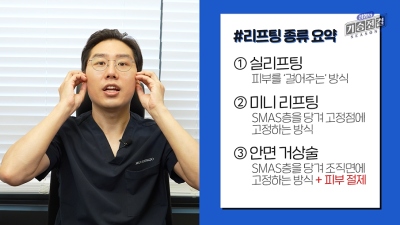
✅Thread Lift: A lift that ‘suspends’ with threads.
✅Mini Lift: An incision lift that pulls the SMAS layer and fixes it in a ‘point form’.
✅Facelift (Full Lift): An extensive lift that pulls and fixes the SMAS in a ‘surface form’ and also excises skin.
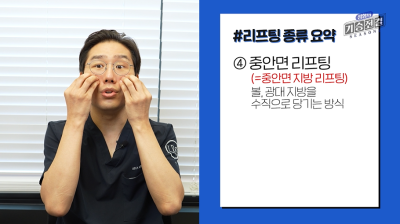
✅Mid-face Lift: A method of vertically lifting and fixing mid-face fat.
https://youtu.be/bA5gaDB6rl8?si=0EfzUGPBhzugpr9B
📌Do you have any more questions?

Frequently Asked Questions
Why does thread lifting use dissolvable threads?
Yes, thread lifting is a procedure that gently lifts the skin rather than strongly fixing it. Even if the threads dissolve over time, collagen tissue is generated in their place, helping to maintain some lifting effect.
Who is mini-lifting suitable for?
It is most suitable for relatively younger individuals whose SMAS layer is still firm. Mini-lifting involves pulling up and fixing the SMAS layer in firm tissue, and if the tissue is too thin or weak, it can break when pulled.
Why is only a 1cm incision made during mini-lifting?
A 1cm incision is the minimum incision needed to find the precise point for tissue fixation. With an incision of this size, it's not possible to cut the retaining ligaments or remove excess skin, and it's applied to perform the surgery in a location where scars are not noticeable.
What are the effects of mid-face lifting?
It has the effect of vertically lifting and fixing the fat in the upper part of the sagging cheeks. It is mainly accessed through lower eyelid surgery incisions and is especially recommended for those with low cheekbones and a sagging mid-face area that makes their face appear long.
What is the difference between partial facelift and mini-lifting?
The biggest difference lies in the length of the incision and whether skin is excised. A partial facelift has a longer incision line extending to the front of the ear, allowing for the excision of excess skin, and tissue fixation and fat redistribution are more extensively performed, resulting in a much stronger lifting effect.