2026-05-29
😁Effective Thread Lift Points from the Director!😁
Learn about effective thread lift points from our director. We discuss when thread lifts are more effective than facelifts or laser treatments, focusing on facial volume and specific areas like the front and side cheeks.
#실리프팅 #실루엣소프트 #민트실 #피치리프팅 #브이실 #테스실 #울쎄라 #써마지 #덴서티 #Density #피부탄력 #피부리프팅 #얼굴리프팅 #페이스리프팅 #앞볼 #옆볼 #턱선 #이중턱 #강남역 #위버스성형외과
Hello~
🫶Your beauty universe! This is Wevers Plastic Surgery.🫶
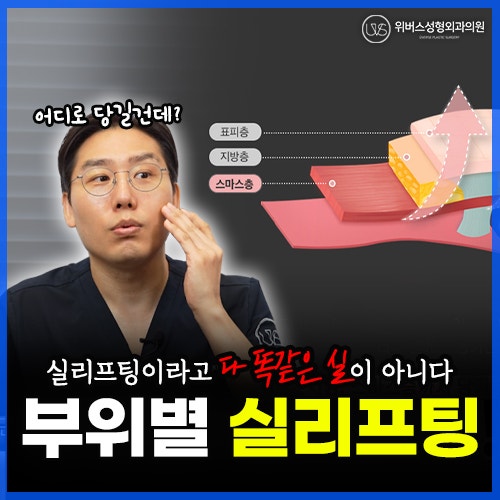
Lifting procedures are very popular these days🔥
Today,
I'd like to talk about why
‘thread lifting is much more effective’
than getting a facelift or laser treatment.
The most important thing is
🎈facial volume🎈.
Among all lifting methods, a facelift can certainly
pull up the volume most effectively.
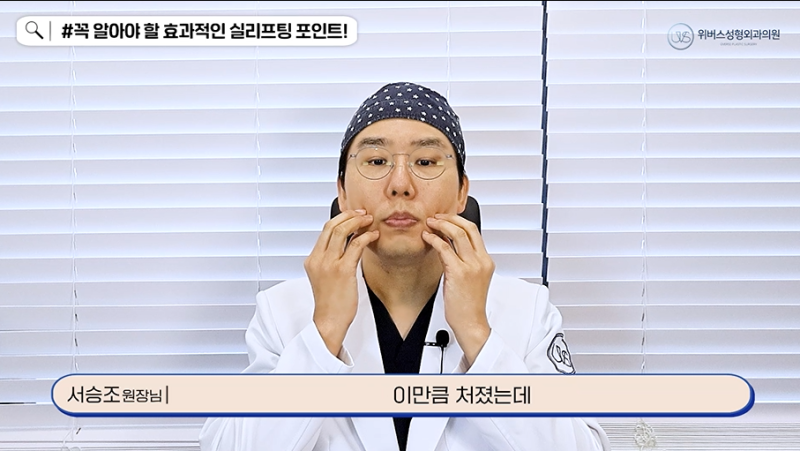
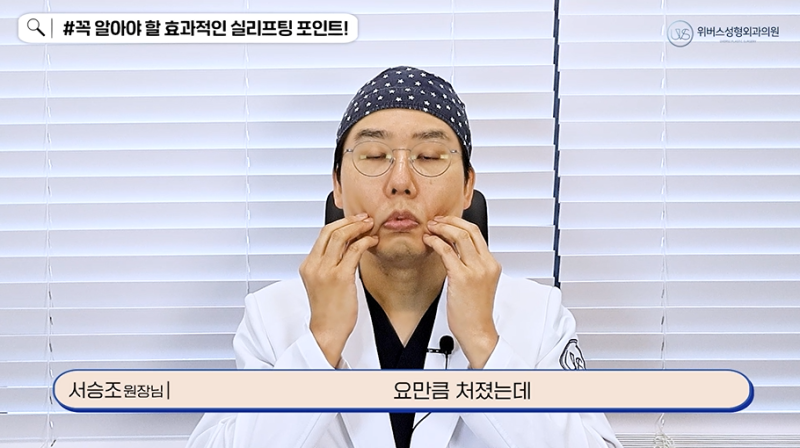
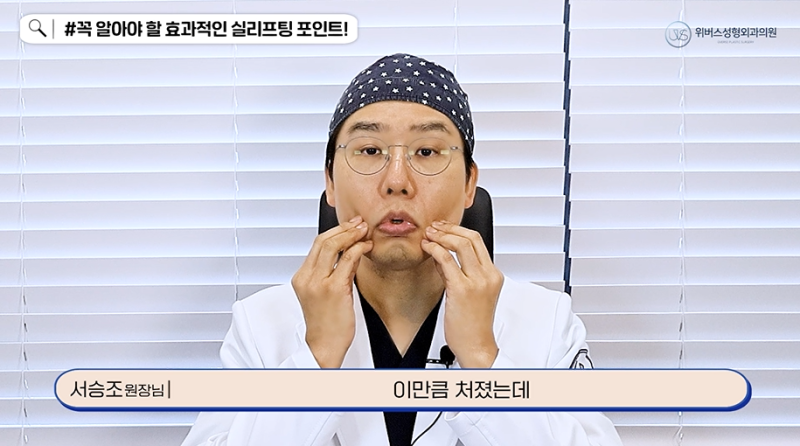
However, if the cheeks are significantly sagged,
a facelift can be cost-effective, but honestly,
if they aren't very sagged,
a facelift isn't really an option.
But that doesn't mean laser lifting alone is always
effective, right? There are many cases where it isn't.
What kind of cases are those?
Let's assume there's a lot of volume in the facial tissue,
but it's more sagged than expected.
The age is roughly 30s to 40s.
Actually, it's a bit too early for a facelift,
so in such cases, we often recommend thread lifting over a facelift.
When performing a thread lift, the most important thing is
‘volume’.
There must be volume to pull.
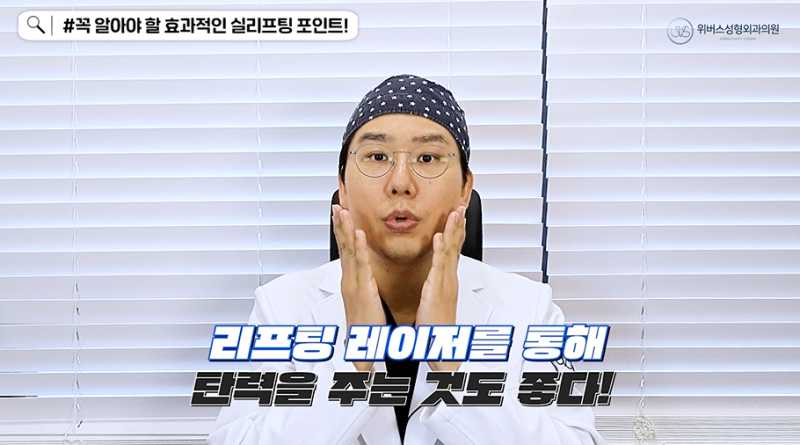
If you only think about sagging skin,
I believe it's much better to improve skin elasticity
through lifting lasers.
However,
✔️if there's sagging volume,
✔️and there's a hollow area that can be filled by moving that volume,
then those are the cases where
✔️we recommend thread lifting the most.
Let's divide the thread lifting areas into two parts.
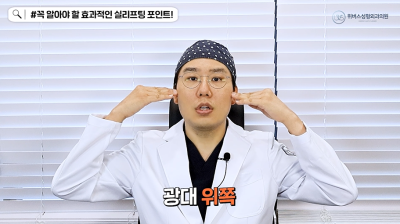
1. Above the cheekbone
2. Below the cheekbone
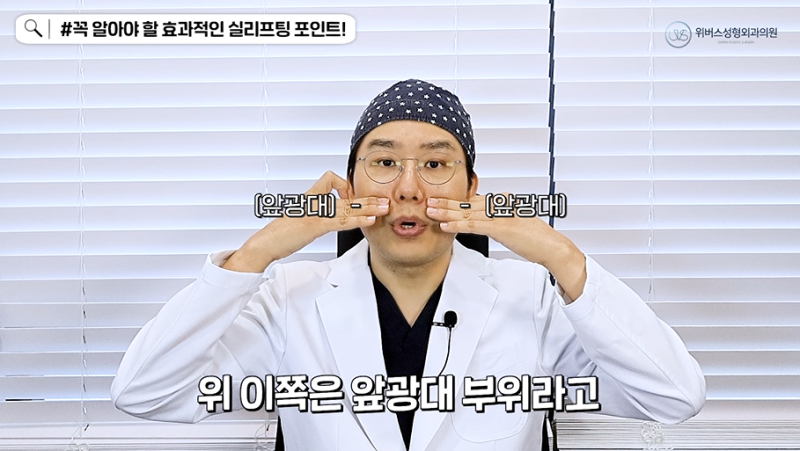
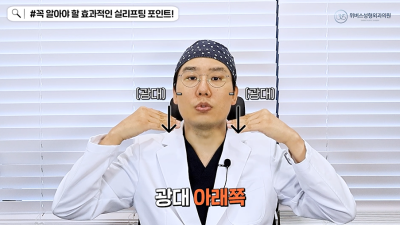
The area pointed to by the hand in the picture is
the front cheek area.
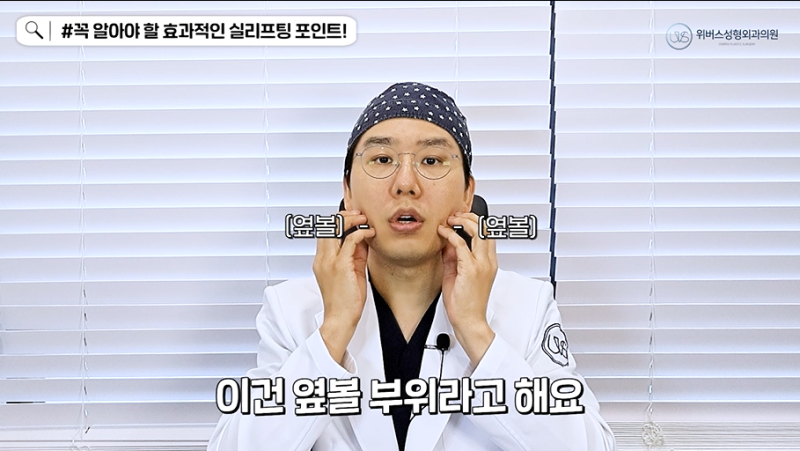
This is the side cheek area.
When lifting the front cheeks,
people with very little volume in this area
won't see much effect even if it's lifted.
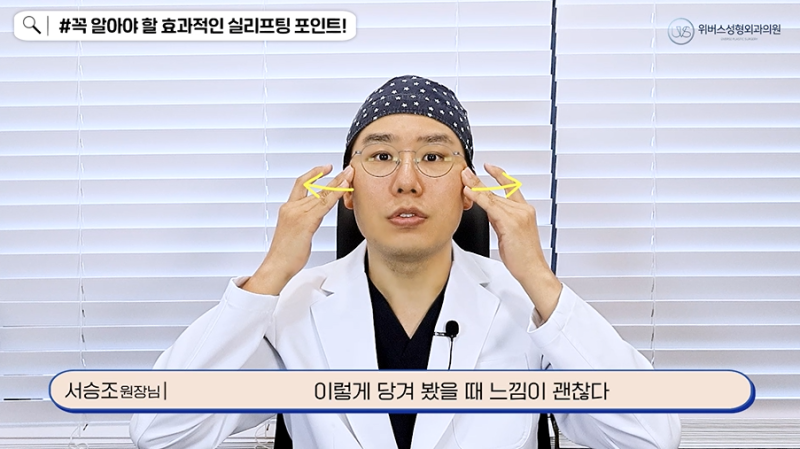
Does it mean there's absolutely no effect? No.
Even if there's no volume in the front cheek,
if you gently place your finger on the cheekbone and pull,
and it feels good, then
volume improvement is possible with a thread lift.
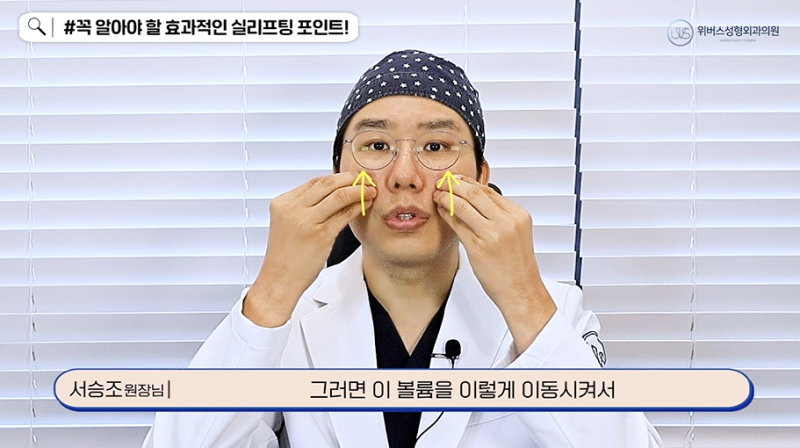
Furthermore, if there's some volume around the nasolabial folds,
the fallen volume can be moved upwards
to fill the hollow areas of the front cheeks.
In such cases, thread lifting can effectively improve the condition,
and lifting sagged volume upwards cannot actually
be done with lifting lasers.
In the case of Ultherapy, a representative lifting laser,
it certainly tightens the skin, but it doesn't give the feeling of lifting.
Skin tightening can give the impression of lifting,
but it doesn't physically lift the skin.
Therefore, if there's truly sagged and hollow volume that can be moved
to fill an empty space,
a thread lift is recommended.
The effect generally lasts for about a year and a half.
Although it varies depending on the type of thread, like laser lifting,
it's good to get thread lifts periodically.
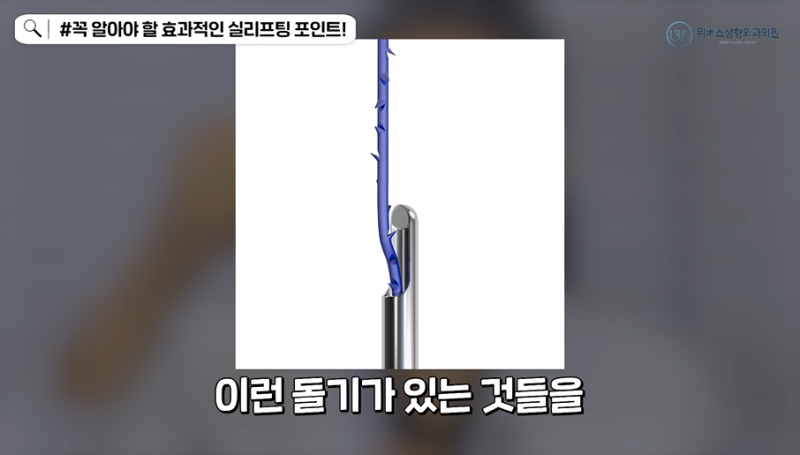
These are the actual threads used in thread lifting.
If you imagine lifting the side cheeks with these barbed threads,
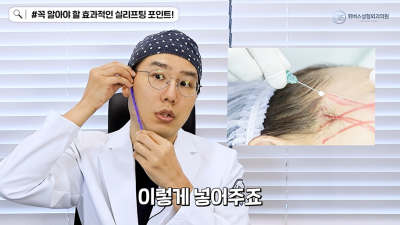
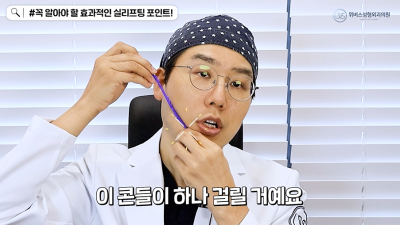
they are inserted from the sideburn area.
When inserted, the thread is hooked and pulled, and one of the cones catches.
Then, cones also catch on the upper side,
and with cones caught on both the upper and lower sides,
the thread is fixed and won't move.
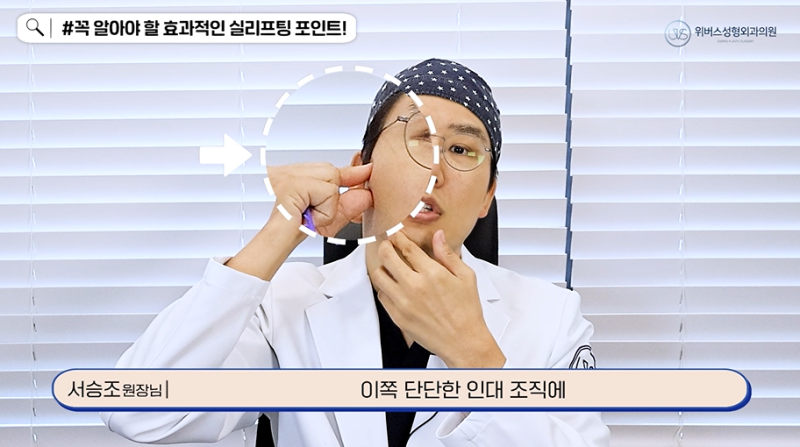
This is how thread lifting works: the sagged area is hooked onto the firm ligament tissue
in the area indicated by the photo.
So, what's important?
If inserted too shallowly, it will all pinch,
and if inserted too deeply, it's meaningless.
This is because the thread would simply go under the fat and pull it.
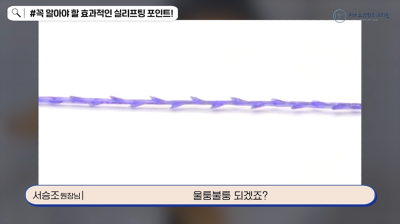
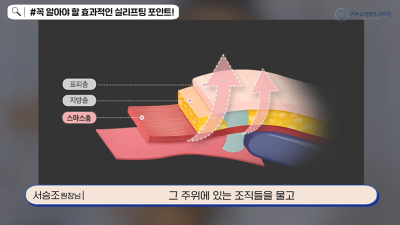
These barbed cones should not be inserted too deeply;
if they are properly inserted into the SMAS layer,
you can imagine them gripping and pulling the surrounding tissues.
And until this thread dissolves,
the lifting force is maintained,
and while the thread is in place,
collagen is also formed to some extent,
so you can consider that adhesion also progresses to some degree.
When performing a thread lift,
we don't just insert one thread.
Typically, at least 3 to 4 threads are inserted on one side,
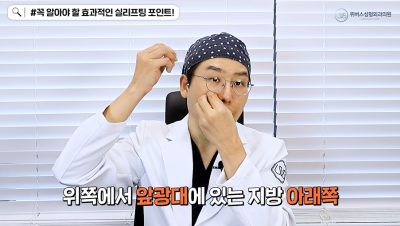
and when lifting the fat in the front cheek from above,
and the fat in the nasolabial folds from below,
at least 2 to 3 PDO threads
are generally inserted.
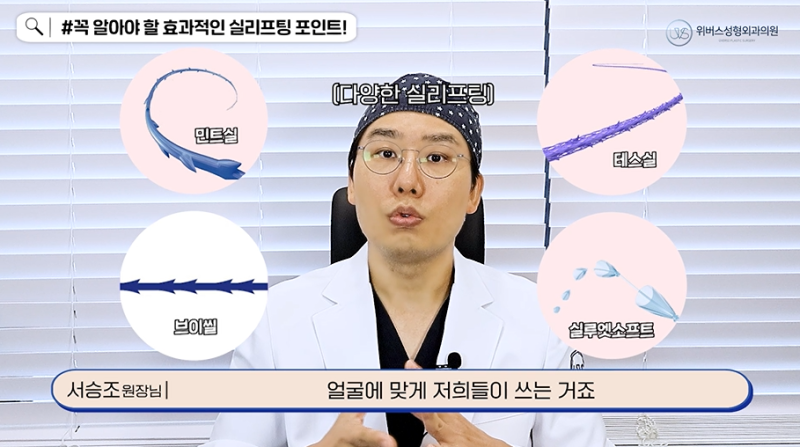
There are truly various types of threads used in thread lifting,
so we use them appropriately according to the patient's skin sagging condition.
I believe it's best to find a plastic surgeon
who can use the appropriate threads for the appropriate face.
As we use them, some people find one type of thread better,
while others prefer another, as there can be subtle differences.
So, you can think of it as finding and using the right threads appropriately.
https://youtu.be/cBPlc_A6veA?si=SY4Nu8xUnbZQpZlJ
❣️Do you have any more questions?


Frequently Asked Questions
Who is thread lifting most effective for?
Thread lifting is most effective for people in their 30s and 40s who have facial volume that has sagged downwards. If only the skin is sagging, laser lifting is better, but if sagging volume needs to be moved upwards to fill in hollow areas, thread lifting, which physically pulls up the skin, is suitable.
How long does the effect of thread lifting last?
The effect usually lasts for about a year and a half. There may be differences depending on the type of thread used and individual skin condition, and receiving regular treatments like laser lifting is more helpful for maintaining elasticity.
Can sagging volume be lifted with laser lifting alone?
No, it is difficult to physically pull up sagging volume with laser lifting alone. Laser lifting like Ultherapy can tighten the skin to give a lifted feeling, but actually moving sagging volume to fill empty spaces is only possible through thread lifting.
How many threads are typically used in a thread lifting procedure?
A minimum of 3-4 threads per side of the face are typically used as a basic amount. At least 2-3 PDO threads are inserted per area to lift fat in the cheekbones or nasolabial folds, and the number and type vary depending on the patient's sagging condition.
What is the most important aspect of a thread lifting procedure?
Accurately inserting the threads into the SMAS layer at the correct depth is the most important aspect. If inserted too shallowly, the skin may pucker, and if inserted too deeply below the fat, it cannot properly pull the tissue, reducing the lifting effect.