2026-05-29
Fatty Eyes (Thick Eyelids): Incision VS Natural Adhesion
#ThickEyelids #EyelidFat #IncisionDoubleEyelid #NonIncisionDoubleEyelid #NaturalAdhesion #DermalAdhesion #PtosisCorrection #IncisionPtosisCorrection #GangnamEyeRevision #GangnamThickEyelids #GangnamNaturalAdhesion #UberPS #SeoSeungJo #ShimJungHwan #ParkSunHee Hello~💎your beauty universe! I am Dr. Park Sun-hee, Director of Uber Plastic Surgery :)💎 Those who have thick eyelids often look fierce and feel heavy

#ThickEyelids #EyelidFat #IncisionDoubleEyelid #NonIncisionDoubleEyelid #NaturalAdhesion #DermalAdhesion #PtosisCorrection #IncisionPtosisCorrection #GangnamEyeRevision #GangnamThickEyelids #GangnamNaturalAdhesion #UberPS #SeoSeungJo #ShimJungHwan #ParkSunHee
Hello~
💎your beauty universe! I am Dr. Park Sun-hee, Director of Uber Plastic Surgery :)💎
Those who have thick eyelids
often have a fierce-looking gaze and a heavy feeling.
To create a refreshing and clear impression,
eyelid fat removal is often considered when planning double eyelid surgery.
The causes of thick eyelids vary, such as having a lot of ROOF (Retro-Orbicularis Oculi Fat),
thick eyelid skin or muscles,
or excessive orbital fat.
To improve thick eyelids, it is important to accurately identify the cause
and find the appropriate solution accordingly.
Thick Eyelids: Natural Adhesion VS Incision Double Eyelid?

There are two types of fat in the upper eyelid.
There is the bulging orbital fat surrounded by the orbital septum,
and there is also the sub-orbicularis oculi fat that lies beneath the orbicularis oculi muscle, making the eyelid look thick.
You must determine which of these two types of fat is more prominent in your eyelid before considering the surgical method.
For those with a lot of orbital fat, the outer part of the eyelid tends to look particularly bulging.
For those with a lot of sub-orbicularis oculi fat, the entire eyelid appears thick and puffy.
If you only have a lot of orbital fat, it is best to perform fat removal along with the natural adhesion method.
If you have a lot of sub-orbicularis oculi fat, it is recommended to use the incision method while simultaneously removing the fat.
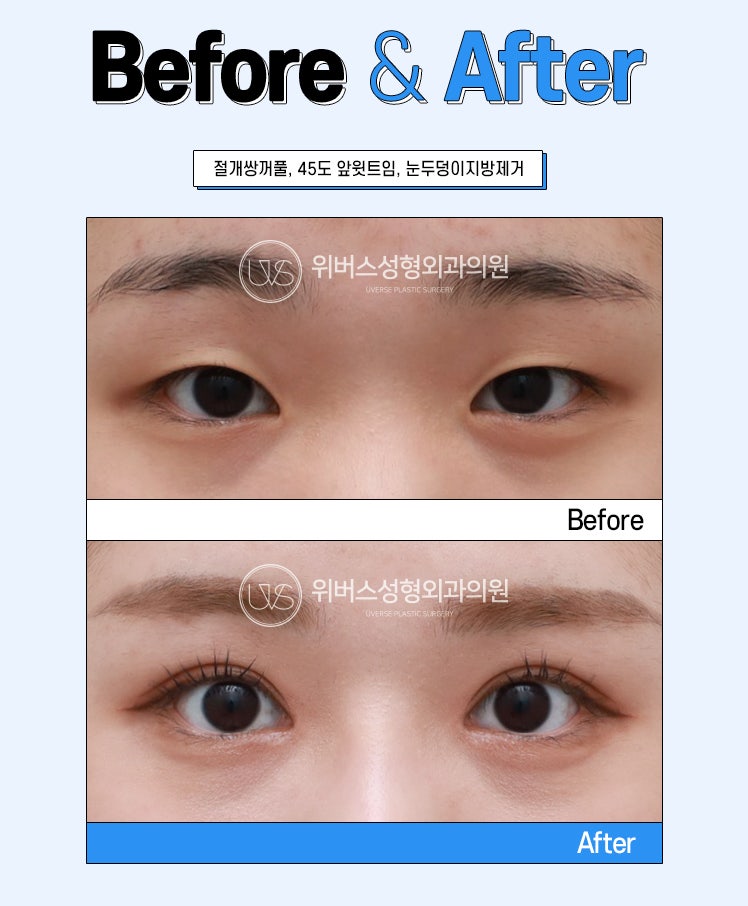
Today, we learned about fatty eyes.
Since fatty eyes (thick eyelids) are considered highly difficult even among eye surgeries,
we recommend getting a 1:1 customized consultation with a board-certified plastic surgeon specializing in eye surgery.
🧡If you want a quick consultation?



Frequently Asked Questions
What causes thick eyelids?
The main causes are excessive loop fat, thick eyelid skin and muscles, or excessive orbital fat. For accurate improvement, it is important to understand each individual's eye condition and find a surgical method that addresses the root cause.
What types of fat are in the eyelids?
There are two main types of fat in the upper eyelid. There is orbital fat, which is surrounded by the septum and makes the outer part of the eyelid convex, and sub-orbicularis oculi fat, which is attached under the orbicularis oculi muscle and makes the entire eyelid appear thick.
What surgical method is suitable for eyes with a lot of orbital fat?
Combining fat removal with the natural adhesion method is suitable. For types where the outer part of the eyelid protrudes particularly convexly due to a lot of orbital fat, this method can effectively improve the eye shape.
If the entire eyelid is thick, do I need an incision method?
Yes, if the entire eyelid is thick, the incision method is recommended. This is likely due to a constitution with a lot of sub-orbicularis oculi fat, and by performing double eyelid surgery with the incision method and removing this fat, a more refreshed and defined eye shape can be achieved.
What should I be aware of when undergoing eye surgery for eyes with a lot of fat?
Accurate identification of the cause before surgery is most important. Eye surgery for eyes with a lot of fat is relatively difficult, so you should have a 1:1 customized consultation with a plastic surgeon specializing in eye surgery to create a surgical plan that suits your fat type.