2026-05-29
Information on Nose Implant Removal by Dr. Seo Seung-jo of Uber Plastic Surgery: Pay Attention if You're Worried About Post-Surgery Side Effects or Dissatisfaction with the Shape!
Information on nose implant removal by Dr. Seo Seung-jo of Uber Plastic Surgery: Pay attention if you're worried about post-surgery side effects or dissatisfaction with the shape! Hello, this is Uber Plastic Surgery! Today's topic for 'Uber Informs' might be a bit heavy. There are people who made a big decision to get rhinoplasty but are considering implant removal due to side effects, dissatisfaction with the shape, or post-surgery anxiety.
Information on nose implant removal by Dr. Seo Seung-jo of Uber Plastic Surgery: Pay attention if you're worried about post-surgery side effects or dissatisfaction with the shape!

Hello. This is Uber Plastic Surgery!
Today's topic for 'Uber Informs'
might be a bit heavy.
Although you made a big decision to get rhinoplasty,
due to reasons such as side effects, dissatisfaction with the shape, or post-surgery anxiety,
there are people who are considering implant removal.
So, today's topic we prepared is
Nose Implant Removal A to Z!
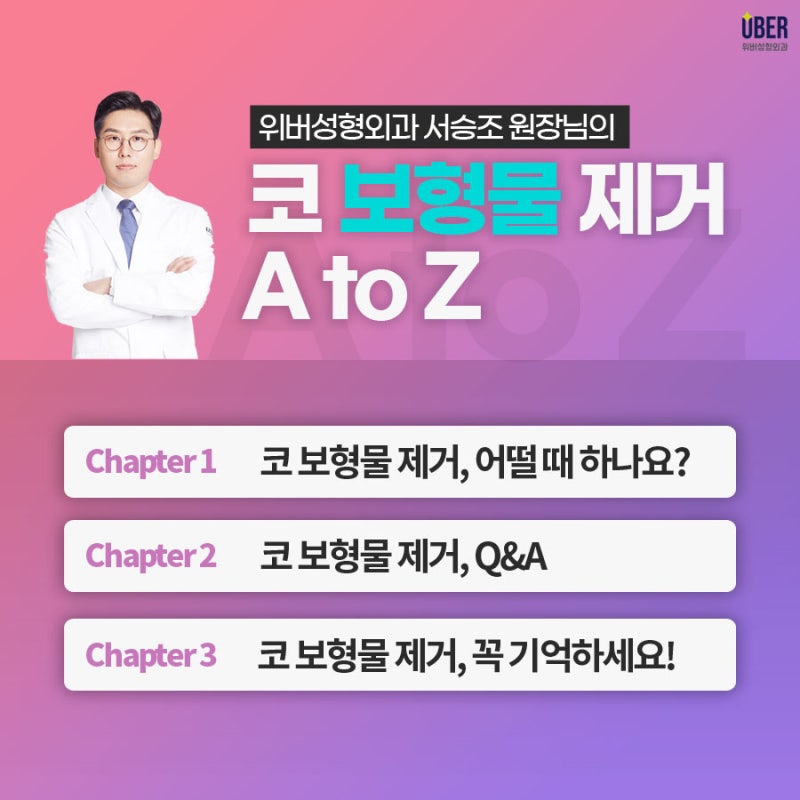
From the situations where nose implants need to be removed
to whether you can return to your original nose after removal,
Dr. Seo Seung-jo of Uber Plastic Surgery will explain it all!

First, when is nose implant removal performed?
The most common cause is inflammation.
Inflammation can occur in various situations.
It can be due to our body's hypersensitivity reaction to the implant,
or cases where bacteria invade before or after the surgery, causing an infection.
When an implant enters our body,
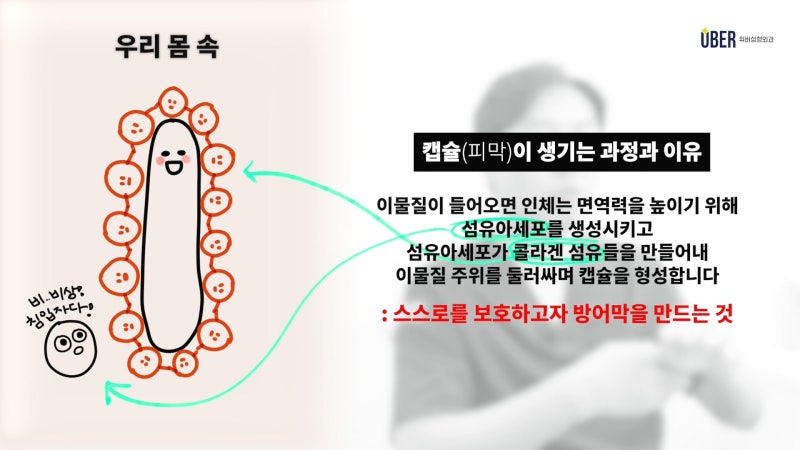
it recognizes it as a foreign substance and surrounds it with a capsule.
In other words, it creates a protective barrier to defend itself!
When this happens, inflammatory cells
no longer recognize the implant as a foreign substance,
preventing an inflammatory response from occurring.
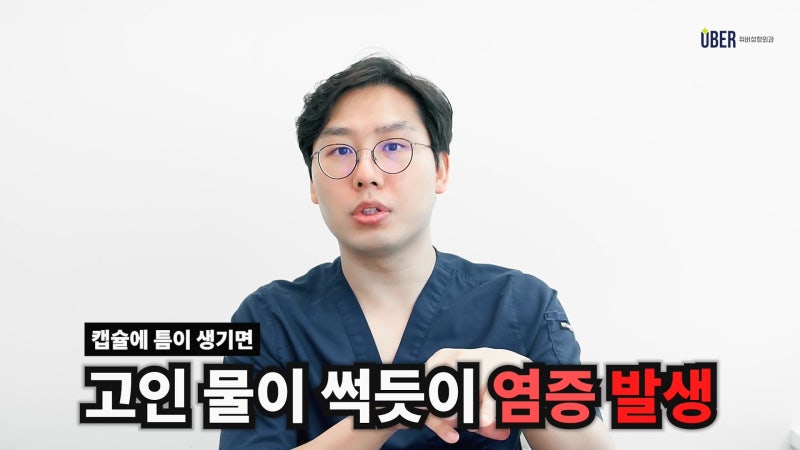
However, if at some point the capsule surrounding the implant widens,
a gap forms inside, fluid accumulates,
and inflammation occurs as the accumulated fluid becomes infected.
If this inflammation erupts significantly, within 2 weeks after surgery,
symptoms such as swelling of the nose will appear.
If minor inflammation repeats,
microscopic bacteria can attach
to the capsule surrounding the implant,
and an inflammatory response can occur even 2 to 3 years later.
Then, to prevent an inflammatory response
after rhinoplasty, what should be done?
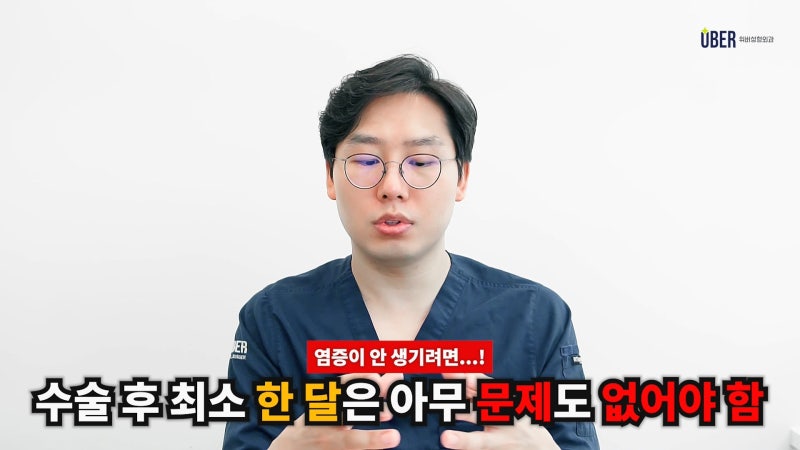
The implant must fit perfectly in the nose without any empty spaces,
and there should be no issues for at least a month after surgery
to significantly reduce the possibility of future inflammation.

The next cause is capsular contracture.
If inflammation repeatedly occurs and heals,
the capsule surrounding the implant contracts
and pulls the nasal tip upward!
In such cases, naturally, you must consider surgery
to remove the implant and reconstruct the nose.

The next cause is the shape.
There are two cases.
One is when the shape was good right after surgery but changed over time,
and the other is when you are dissatisfied with it right from the start.

If the shape changes severely or the implant wobbles after surgery,
it means the implant is not in its proper place
and has continued to move.
As mentioned earlier, the capsule widens by that amount of space,
and fluid can accumulate in the widened capsule, leading to inflammation.
If you are experiencing these symptoms,
please make sure to visit the clinic for a consultation!

Second, Nose Implant Removal Q&A!
Q. Is there any way to know in advance
if the implant will fit my nose?
No, there isn't. Therefore,
to rule out the possibility of an ill-fitting implant as much as possible,
the best approach is to carve it well and properly position the nasal tip
so that the implant can rest comfortably inside the nose
during the surgery.
Q. If I remove the nose implant, will my nose become as low as it was before the surgery?
In the case of the surgical method from 10 to 12 years ago,
where the implant was inserted from the nasal bridge to the nasal tip,
removing the implant can result in a shape closest to your original nose.
The biggest drawback of this was that the implant could protrude through the skin,
so recently, the implant is only inserted from the bridge to just before the tip,
and the nasal tip is elevated using autologous cartilage.

While this method compensates for the drawbacks of the surgery from 10 to 12 years ago,
if the implant is removed,
the nasal bridge will sink while the tip remains projected,
making the nose look even lower than your original nose.
However, depending on how many millimeters the previous implant was
and how much the nasal tip was raised,
the shape can vary slightly.
Q. I heard the nasal tip gets upturned if the implant is removed. Is that true?
It depends on the case, but there is a possibility.
If the area where the implant was removed sinks in
and the nasal tip remains projected, the tip loses its directional support
and could shift upward, giving an upturned appearance.
However, if the tissue had no prior inflammation,
once the foreign substance is removed from our body,
capsular contracture rarely occurs.
Q. Is nose implant removal surgery more difficult than rhinoplasty?
It depends on the type of implant.
Because silicone is surrounded by a capsule,
making an incision inside the nose and removing the implant is quick and easy. On the other hand,
if Gore-Tex was used, the surrounding tissue has grown into the implant itself,
so it is difficult to remove easily as the tissue must be carefully detached piece by piece.
Q. If I remove everything that was put inside my nose,
can I go back to my original nose?
Not exactly.
Taking the nasal tip cartilage as a prime example,
cartilages are all connected by small ligaments.
They act as a structural support.

During rhinoplasty, this supporting cartilage is spread apart
and tied back together.
Simply removing the implant and tying it again with sutures
does not recreate that original support structure,
so your nose may become lower or shorter than your original nose.
Therefore, I advise against this and believe the best approach is to slightly reposition the cartilages
to help you return to your original appearance as much as possible.
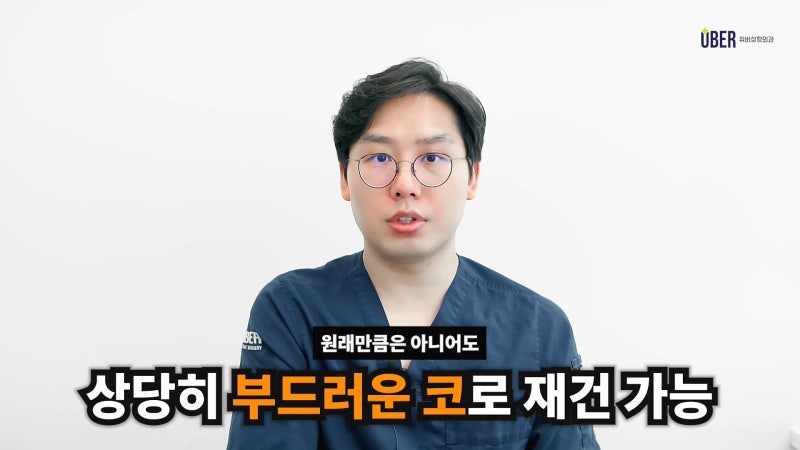
However, most of these patients want their nose to be
as soft as it used to be.
In that case, since there is no need to raise the nasal bridge and tip as much as before,
we can create a support structure using a slightly weaker strut and techniques like columellar strut grafts
rather than septal extension grafts.
By doing this, even if it's not exactly like before,
it is possible to reconstruct a significantly softer nose.

In conclusion, after rhinoplasty, when removing the nose implant and
all previously inserted cartilage,
regarding whether you can return to your original state,
it doesn't just go back by simply removing them;
a reconstruction process of removing and creating a new shape is necessary!

When you want to remove your nose implant,
the first priority is to get an accurate diagnosis from the doctor who performed your surgery
and come to a clear conclusion
on how to resolve the issue.
Unconditionally removing the nose implant
and the cartilage inserted inside the nose
does not guarantee good results,
so please make your decision carefully!

This topic of 'Uber Informs'
was discussed with Dr. Seo Seung-jo of Uber Plastic Surgery.
It would be great if you were satisfied with your primary rhinoplasty,
due to inflammation, dissatisfaction with the shape, or psychological anxiety,
since this topic is for those who want to remove their nose implants,
we hope it was very helpful to those in such situations!

Please make sure to subscribe and like Uber Plastic Surgery,
and if you have any questions about plastic surgery,
feel free to leave a comment anytime!
See you next time! Bye~
Frequently Asked Questions
In what cases is nasal implant removal usually performed?
It is mainly performed when there is inflammation, contracture, or dissatisfaction with the shape. If inflammation occurs around the implant or the capsule contracts, causing contracture where the nasal tip is pulled, implant removal and reconstructive surgery should be considered.
Does removing a nasal implant completely restore the nose to its original pre-surgery state?
No, it is difficult to return it exactly to its original state. Since the surgery involved spreading and tying cartilage, simply removing the implant does not recreate the support structure, and the nose may become lower or shorter than its original state, requiring a reconstructive process.
Is there a side effect of the nasal tip lifting after nasal implant removal?
Yes, in some cases, the nasal tip may feel slightly lifted. This is because the space where the implant was removed sinks in, and the nasal tip protrudes, losing its directionality. However, if there was no prior inflammation, contracture rarely occurs after foreign body removal.
Is nasal implant removal surgery more difficult than the first rhinoplasty?
It depends on the type of implant. Silicone implants are surrounded by a capsule and can be removed relatively easily, but Gore-Tex implants are much more difficult to remove because tissue infiltrates the implant itself, requiring the tissue to be cut piece by piece.
Can I know in advance if the implant will fit my nose before surgery?
No, there is no way to know for sure in advance. Therefore, the best method currently is to trim the implant well during surgery to minimize situations where it doesn't fit and to ensure it settles comfortably inside the nose.