2026-05-29
Something showing through the tip of your nose after nose surgery? Solutions for tip transparency
Discover why the tip of your nose might show through after rhinoplasty and how to address it. Learn about skin thickness, cartilage visibility, and treatment options like dermal grafts or revision surgery to achieve a natural, stable result.

#NoseTipTransparency #NoseSurgerySideEffects #EarCartilage #Septum #ImplantFreeNoseSurgery #Silicone #NasalBridgeStep #NoseRevisionSurgery #BestNoseSurgeryClinic #AutologousRibCartilage #DonatedRibCartilage #ImplantFree #PlasticSurgeryReview #BeforeAndAfterPlasticSurgery #NoseTipCartilageTransparency #GangnamStation #WeversPlasticSurgery
Hello~ Your beauty universe!
❤️I'm Dr. Shim Jeong-hwan from Wevers Plastic Surgery :)❤️
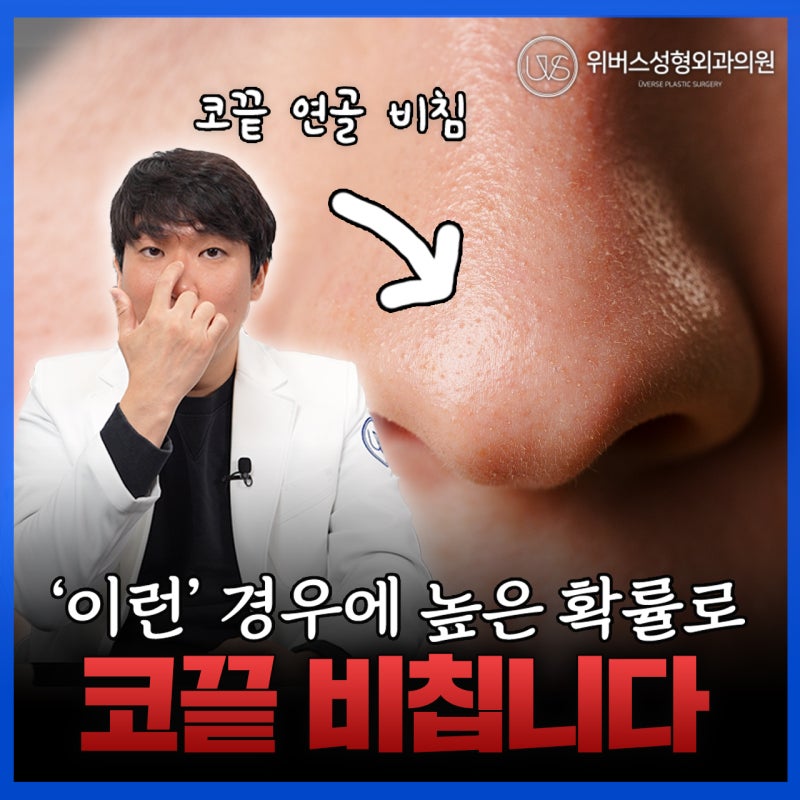
Q: Why does the tip of my nose show through after nose surgery?
If your skin is thin,
internal structures are more likely to show through.
Nose surgery involves building a solid internal structure
and then covering it with skin.
Therefore, for those with thick and firm skin, even if the inside is made pointed,
the exterior may appear relatively blunt, which can be a drawback.
Conversely, for those with thin skin, no matter how smoothly the inside is made,
the contours or angular parts of the cartilage are likely to show through.
This phenomenon can also occur naturally in people who haven't had surgery.
However, after surgery, new changes appear that weren't there before,
so it often becomes more noticeable.

Especially if the nasal tip is excessively raised compared to the skin condition,
due to continuous pressure,
the skin may gradually thin over time, and transparency may worsen.
In the case of revision surgery, repeating it multiple times
can inevitably lead to the skin becoming thinner,
making the cartilage more visible even with slight pressure.
Q: My nasal tip is showing through more over time.

Immediately after surgery, swelling may remain, making transparency less noticeable,
but usually after about 6 months to 1 year,
the swelling subsides, and the condition stabilizes.
After 3, 5 years or more, as time passes,
the skin is subjected to increasing irritation,
and cartilage transparency may gradually worsen.
Q: Do such individuals necessarily need revision surgery?

Cartilage showing through does not necessarily require revision surgery.
There is almost no possibility of the cartilage piercing through the skin,
so if it doesn't bother you significantly, you don't necessarily need to proceed with surgery.
However, if the skin has thinned due to surgery or
if your skin was originally thin, it won't recover.

If you wish to maintain the existing height,
it may be helpful to combine surgery to reinforce the skin
through dermal grafting or similar procedures.
Conversely, to reduce tension on the skin,
choosing to lower the height somewhat from the original may be more appropriate in some cases.
Q: So, will transparency issues not occur after this?

Dermal grafts can still show through depending on the degree of engraftment,
and additional grafting may be performed as needed.
Therefore, it is difficult to say that transparency will completely disappear 100%.
Q: How should surgery be performed to avoid transparency?

Septal cartilage, commonly used for nasal tip surgery, is a firm material,
so its texture and contours can be relatively easily felt.
There is also a method using ear cartilage,
but considering the maintainability of the nose shape, septal cartilage is generally used.
In this case, it is important not to raise the nasal tip height excessively.

Before surgery, it is advisable to consider
the movement of the nasal tip along with the skin condition.
For those who frequently move their nasal tip when smiling or speaking,
the cartilage may be subjected to more irritation,
so a natural and stable design is more suitable from the beginning than an excessive height.
If cartilage transparency bothers you, it's best to let go of the desire for excessive height
and choose a natural line. Then, if necessary,
you can expect sufficient improvement by reinforcing the skin with dermal grafting.
If you want to reduce transparency after nose surgery,
let go of the desire for excessive height, naturally lower the nasal bridge,
and if insufficient, reinforce the skin with dermal grafting. This can sufficiently resolve the issue.
I hope you consult with a board-certified plastic surgeon to achieve good results.
https://youtu.be/ImtcotX7e5U?si=Cu5TTXbpxkPHOCsu
Want to see the full video or surgical cases?🔍


Frequently Asked Questions
Why does the tip of my nose show through after rhinoplasty?
This is mainly because the skin is thin or the nasal tip was excessively raised. Due to the nature of the surgery, which involves building a firm structure inside the nose and covering it with skin, if the skin is thin, the cartilage outline is likely to show through. In particular, if the nasal tip is raised too much, continuous pressure can thin the skin, making the show-through more severe.
It was fine immediately after the surgery, but it started showing through over time.
Yes, this can be a natural phenomenon as swelling subsides. Immediately after surgery, the show-through may be less noticeable due to swelling, but typically after 6 months to 1 year, when the swelling has completely subsided, the cartilage may become more visible. In some cases, after more than 3 years, accumulated irritation can worsen it.
If the nasal tip cartilage shows through, do I always need revision surgery?
No, revision surgery is not always necessary. It is highly unlikely for the cartilage to pierce through the skin, so if you are not significantly bothered by the appearance, you can leave it as is. However, if the cosmetic stress is considerable, you can consult with a specialist to consider correction.
What are the revision surgery methods to fix a showing nasal tip?
The main methods used are lowering the height of the nasal tip or reinforcing the skin through dermal grafting. It is advisable to slightly lower the nasal tip height compared to before to reduce tension on the skin. If you wish to maintain the original height, dermal grafting can be performed to compensate for the thinned skin thickness.
Does dermal grafting solve the show-through problem 100%?
No, it is difficult to say that it will completely disappear 100%. Depending on the engraftment of the transplanted dermis, there is a possibility that the cartilage may show through again over time. Therefore, additional dermal grafting may be performed if necessary, so sufficient consultation with a specialist is required before surgery.