2026-05-29
Why does nasal congestion occur after nose surgery? How to resolve and prevent nasal congestion? | Nose Side Effects Part 1
Nasal congestion after nose surgery is a common concern. This article explores the reasons behind it, such as narrowing of the nasal cavity due to internal deviation or thickening, and offers solutions and preventive measures, including the importance of pre-operative CT scans and careful post-operative monitoring.
#NoseRevision #NoseSurgery #Rhinoplasty #Nose #Columella #DeviatedSeptum #Rhinitis #FunctionalRhinoplasty #FunctionalNoseSurgery #InferiorTurbinate #InternalNasalValve #NonIncisonRhinoplasty #PlasticSurgerySideEffects #NasalCongestion #NasalCongestionRelief #CausesOfNasalCongestion #SurgicalSideEffects #WeversPlasticSurgery #SeoSeungJo #NoseSideEffects #NoseSurgerySideEffects #CrookedNose #NoseDeviationSymptoms
Hello~
✨Your beauty universe! This is Dr. Seo Seung-jo from Wevers Plastic Surgery :)✨
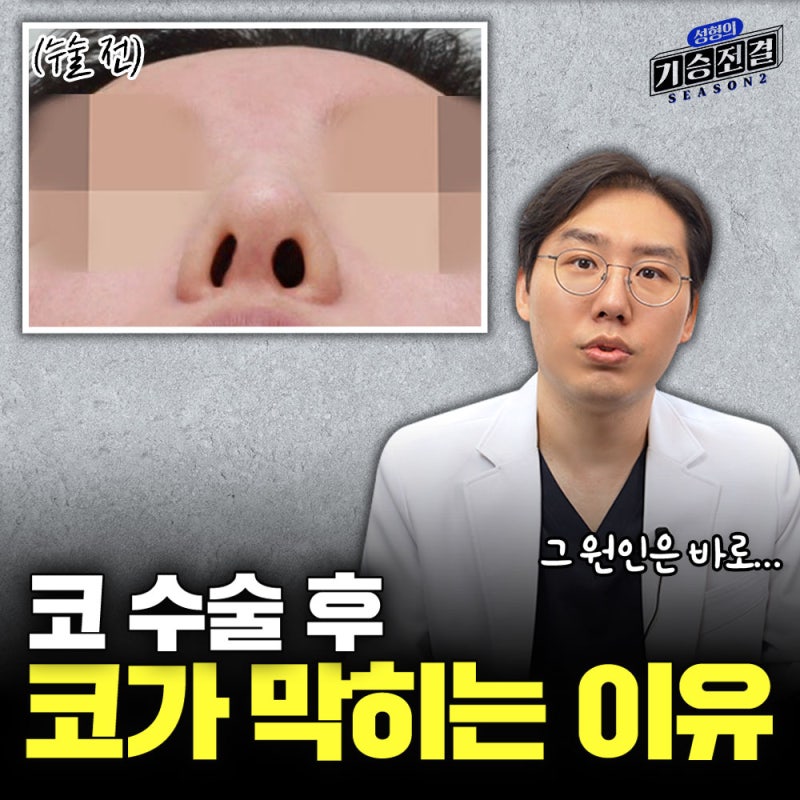
There are people who experience nasal congestion after nose surgery.
Some also develop snoring.
Especially for those who felt nasal congestion before surgery,
many are opting for functional rhinoplasty to improve nasal congestion symptoms after surgery.
Therefore, to prevent further functional problems after surgery,
at Wevers Plastic Surgery, we provide thorough and safe care during consultations.
Today's topic is why functional problems occur after nose surgery,
and what steps can be taken to prevent them.
Why does nasal congestion occur after nose surgery?
Nasal congestion occurs when the space inside the nose narrows.
Temporary congestion due to swelling usually improves over time.
However, there are cases where it doesn't.
Broadly, there are two main reasons:
internal nasal deviation and internal nasal thickening.
What are the cases where the nose appears visibly crooked?
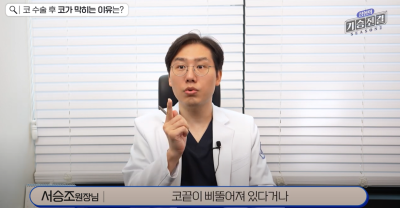
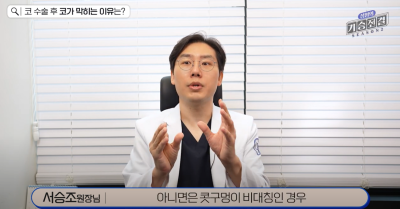
1. When the nasal tip is crooked
2. When the nostrils are asymmetrical
In fact, when the nostrils are asymmetrical,
even if the inside of the nose is wide open, it's often the most congested.
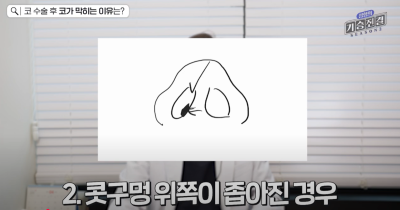
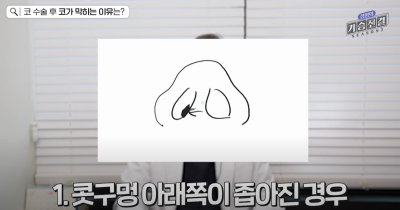
Looking at the images above, there are cases where the nostril narrows downwards
and cases where it narrows upwards.
Many patients visit complaining primarily of nasal congestion when the lower part is narrowed,
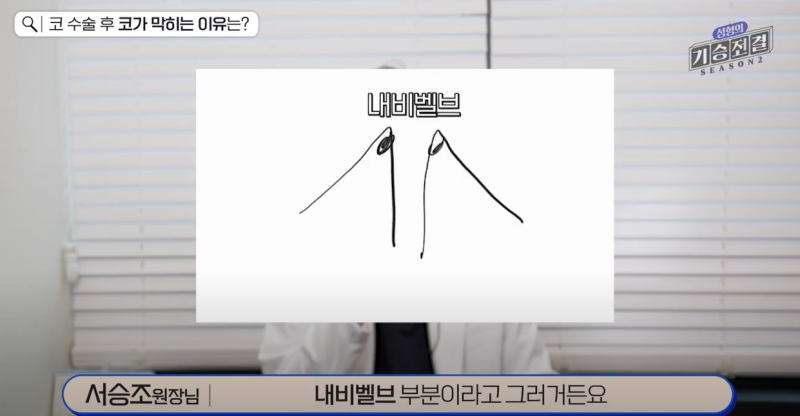
When the upper part is narrowed,
patients sometimes visit because the internal nasal valve area is blocked.
If the internal nasal valve area is blocked, sensation in this area can be lost after surgery,
making it difficult to perceive nasal discharge until it drips down,
and only then do some realize they've had a runny nose.
Quite a few patients visit the hospital with these symptoms.
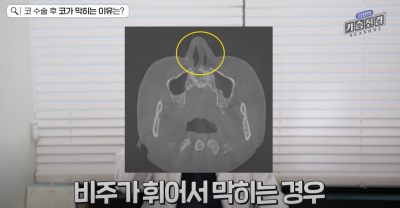
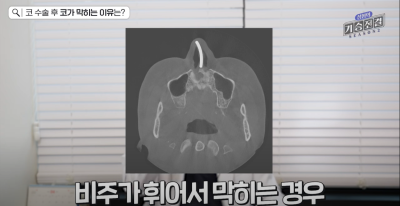
Next is congestion due to a crooked columella.
Crooked columella = crooked support structure
Even if the inside is completely open,
it will naturally cause nasal congestion.
Sometimes it's due to incorrect placement of the nose's support from the beginning,
but the balance between the lifting force and the pressing force must be maintained during placement.
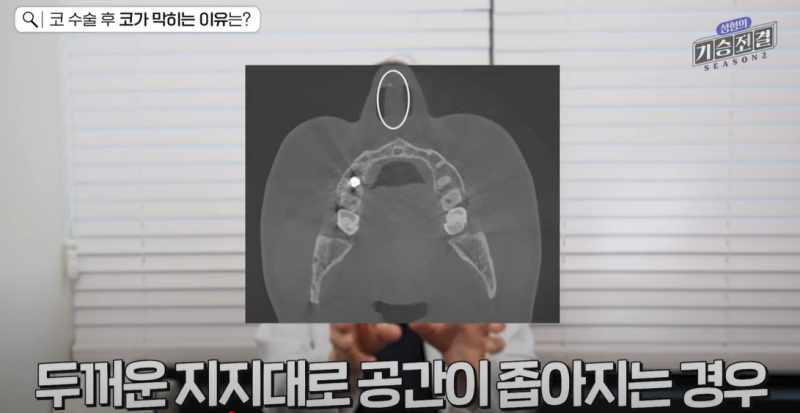
If this balance is not well maintained,
it can gradually become crooked.
If the support is built too thickly, narrowing the space,
and the entrance is limited, but too much is built for strength,
the nose will inevitably become congested.
Ultimately, the reasons for nasal congestion are
narrowing of space due to a thick support structure, causing deviation, or the support structure itself being crooked.
Most patients sometimes come in with only one nostril blocked suddenly after surgery.
Congestion due to thickening inside the nose is not very common,
and it's rare for both nostrils to be blocked, as it's usually due to deviation to one side.
Since it deviates to one side, one side remains open
and the other narrows, so ultimately, it's all a problem with the support structure.
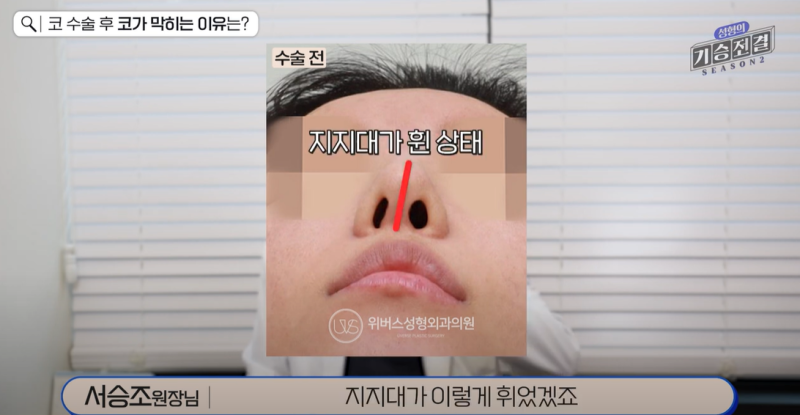
When the lower part of the nose is blocked, the support structure is crooked like this.
When it's crooked in this manner, the opening narrows, preventing air from entering, thus causing congestion.
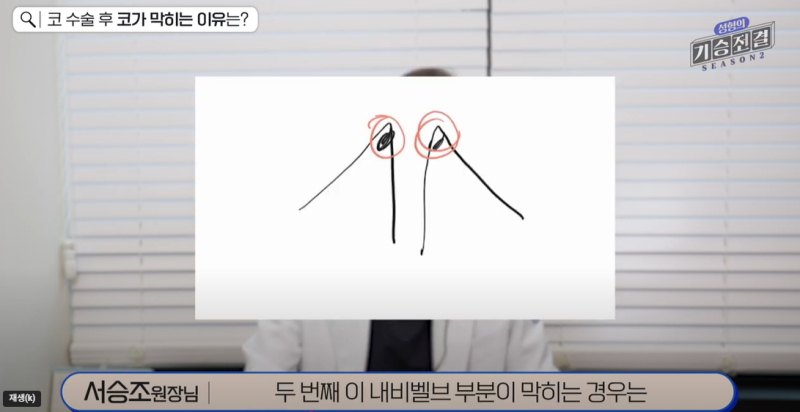
Secondly, when the internal nasal valve area is blocked, it can be due to deviation, but also
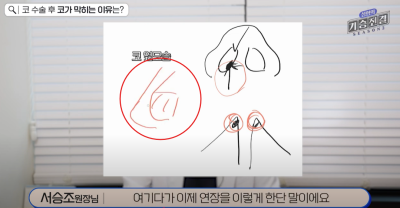
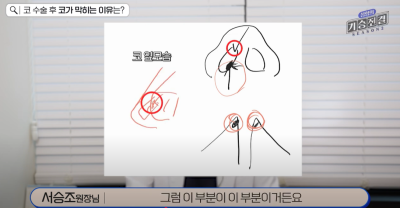
As shown in the image, when septal extension is performed, these areas are bound to narrow.
If nasal congestion persists, it's a problem with the front of the nose.
If nasal congestion doesn't usually occur, but snoring worsens,
and there's a feeling of stuffiness in the nose, it can actually be considered a problem further back.
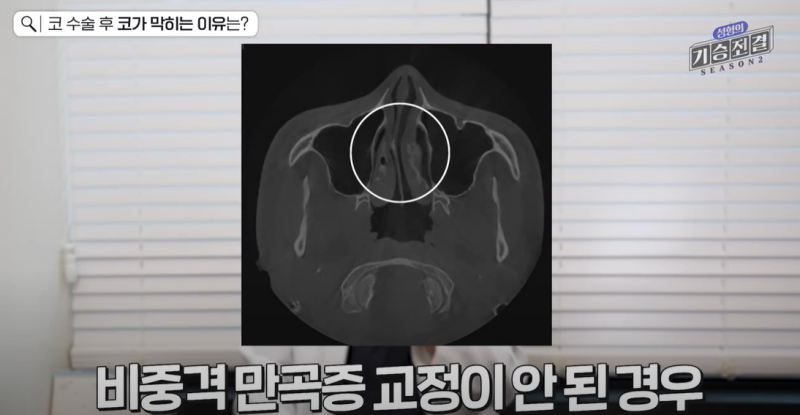
And if you feel more congested when lying on one side,
it can be seen as a case where a deviated septum has not been corrected.
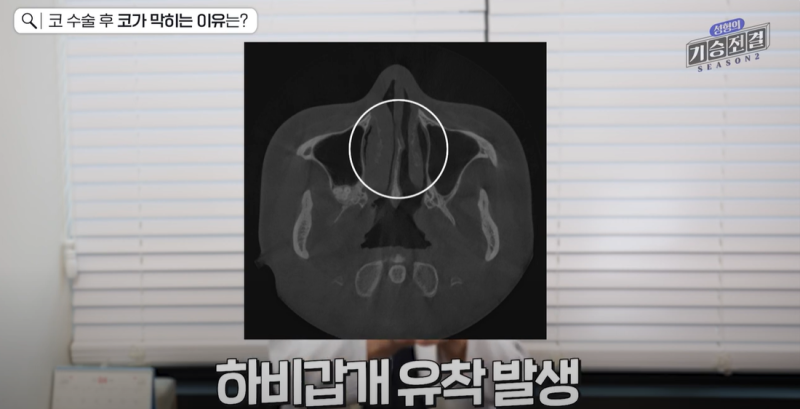
It could be that a pre-existing deviated septum was not corrected,
or after septal harvesting, the posterior part swells more or gets injured,
leading to inferior turbinate adhesion.
What precautions should be taken before surgery?
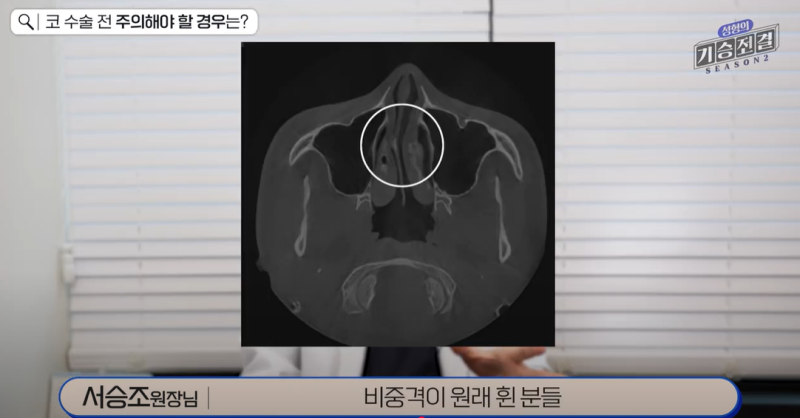
Looking at the picture above,
if the septum is deviated and extended as is, what happens?
The nose becomes crooked.
Then, naturally, the internal nasal valve will be more blocked.
In such cases, septoplasty must be performed to correct the deviation from the back
so that the support structure (septum) can be straightened.
So, if nasal congestion occurs due to these various problems, can it be resolved?
Of course, it can be resolved.
If the support structure is not crooked,
and it's well maintained straight, but it gets blocked when lying on one side, or when lying on the other side, there are such cases.
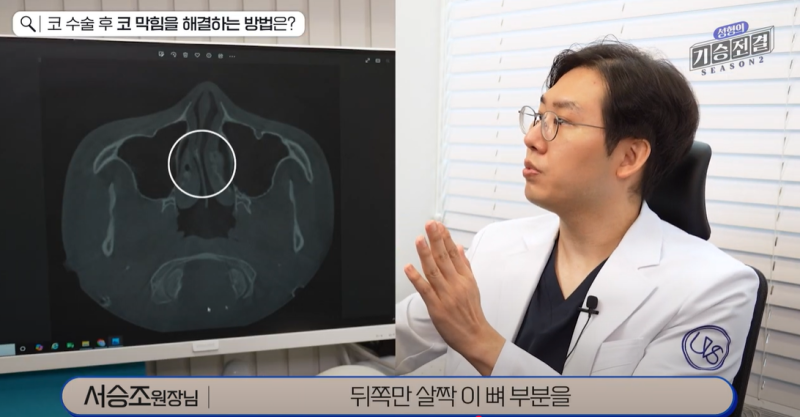
In such cases, some people correct only the posterior part of the bone with septoplasty.
That could also be a simple method.
If it cannot be resolved,
it's better to reduce the inferior turbinate while the septum is still deviated, to widen the posterior space.
In such cases, it can be done without altering the shape of the nose.
And there are people whose nose shape, including the side profile, is fine,
but their nostrils are asymmetrical.
In these cases, the nose might need to be reopened and corrected,
but sometimes, just slightly adjusting the position of the support structure with a non-incisional method is sufficient.
Ultimately, how the support structure is placed during surgery is most important.
There are cases where the entire septum cannot be moved.
Sometimes, the support structure needs to be completely separated and re-grafted,
in which case, one waits 6 months and then performs revision surgery by opening the nose.
- When the internal nasal valve is thick and blocked
- When the support structure is built too thickly and blocked
Nasal congestion due to a thickly built support structure is actually ambiguous.
Sometimes, the support structure is built thickly during nose surgery.
This is to prevent it from collapsing when built high.
If the support structure is built thinly, it naturally won't receive enough force,
and if it doesn't receive enough force, its height must be lowered.
If nasal congestion can be prevented before nose surgery, what methods are there?
In fact, if the operating surgeon makes a good judgment,
as a method to prevent nasal congestion before nose surgery,
I recommend taking a CT scan.
Always take a CT scan before surgery to accurately assess the condition inside the nose before operating.
It's necessary to accurately determine whether the likelihood of blockage increases in the back or front,
or whether it might become crooked when built up.
And after surgery, it's also important to continuously check the condition inside the nose
for up to a month.
This is because early correction is sometimes possible.
So, after surgery, the exterior is not as important as
the inside of the nose, which is most crucial.
If there are no problems internally,
the likelihood of external nasal problems occurring significantly decreases.
Temporary nasal congestion usually improves within a month.
Most cases improve within about 2 weeks,
but if it doesn't improve quickly, it's most likely a structural problem inside the nose.
I recommend seeing a specialist for a consultation.
Getting a consultation, taking a CT scan, and analyzing the situation to see how much can be resolved
is also important as a preventive measure.
💖Want a quick consultation?


Frequently Asked Questions
When does nasal congestion improve after nose surgery?
Nasal congestion due to temporary swelling usually improves naturally within 1 month. Symptoms typically alleviate in about 2 weeks, but if your nose remains blocked after a month, it is likely a structural problem inside the nose, so it is advisable to consult a specialist.
Why is only one nostril continuously blocked after surgery?
It is highly likely that the support in the nose has deviated to one side. If the support deviates due to an imbalance of force when building up the nose, one space opens up and the opposite space narrows, causing only one nostril to be blocked.
My snoring has worsened after nose surgery, what is the cause?
It is highly likely that there is a problem in the posterior part of the nose, not the anterior part. If septal deviation correction was not properly done, or if the posterior part swells and gets injured after septal cartilage harvesting, leading to inferior turbinate adhesion, snoring and stuffiness can worsen.
How can I prevent nasal congestion as a side effect?
It is essential to accurately check the internal condition of the nose with a CT scan before surgery. Taking a CT scan to understand the internal structure of the nose can help predict the likelihood of blockage or deviation of the support after surgery, and the internal condition should be continuously checked for up to 1 month after surgery.
If my nose is blocked due to a deviated support, do I need revision surgery?
Yes, correction or revision surgery may be necessary depending on the symptoms and condition. For mild symptoms such as nostril asymmetry, the position of the support can be slightly corrected with a closed approach, but if the support needs to be completely separated and re-implanted, an open revision surgery is usually performed after waiting 6 months.